Meta Description: Discover the ultimate guide to Etosha National Park, Namibia. Learn about its unique landscape, abundant wildlife, best travel times, and safari experiences for planning your perfect African safari.
Destination Overview
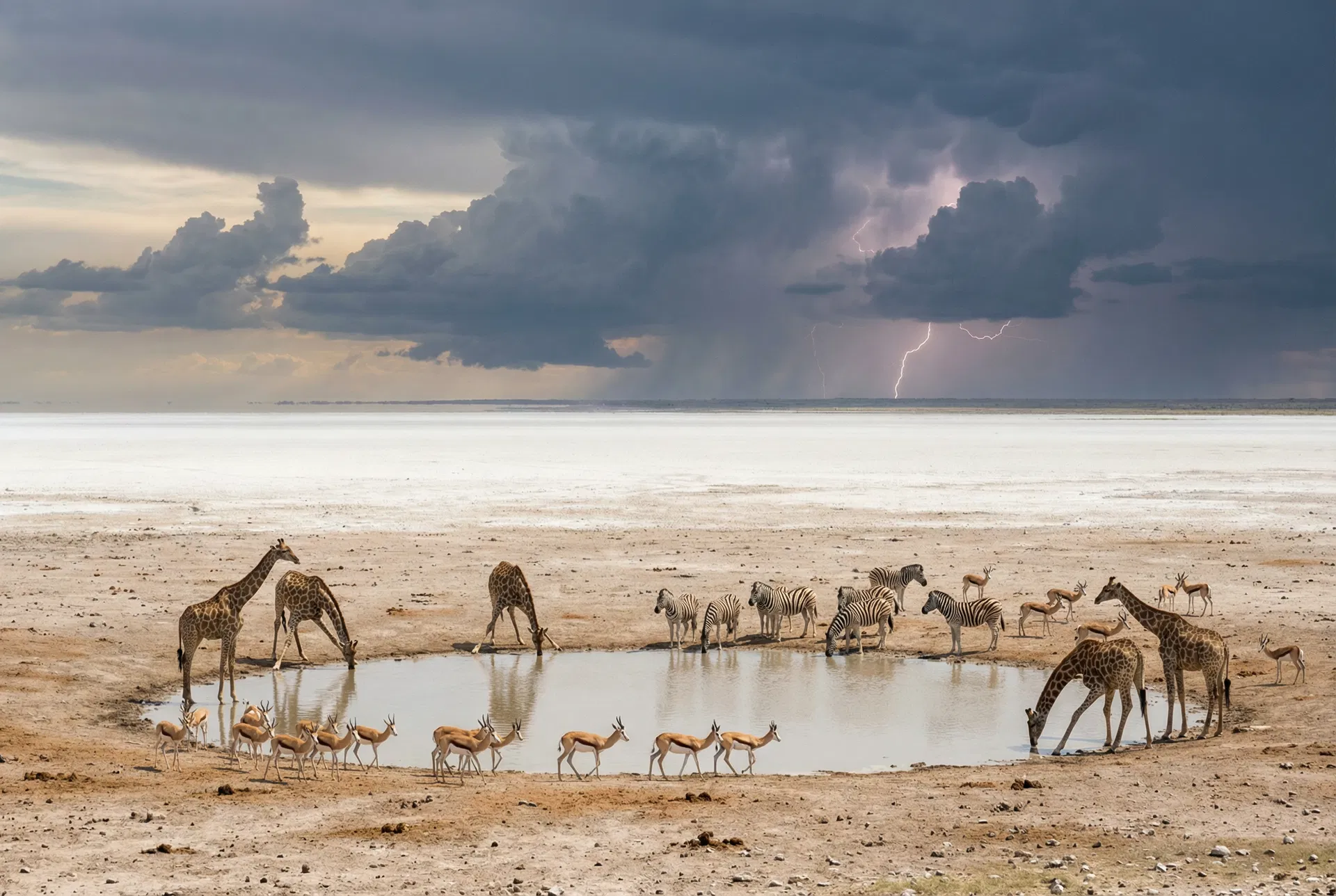
Etosha National Park, located in northwestern Namibia, is one of Africa's most captivating and accessible wildlife sanctuaries. Its name, translating to "Great White Place," perfectly describes the park's most prominent feature: the vast Etosha Pan. This enormous salt pan, visible from space, creates a dramatic, shimmering landscape that sets Etosha apart from any other safari destination. During the dry season, the pan is a stark, white expanse, while the wet season transforms it into a shallow lake, attracting a myriad of birdlife. Travelers are drawn to Etosha for its exceptional and reliable game viewing, as the park's numerous waterholes become magnets for a dense concentration of wildlife, offering unparalleled opportunities to observe a diverse range of animals in their natural habitat.
Wildlife Highlights
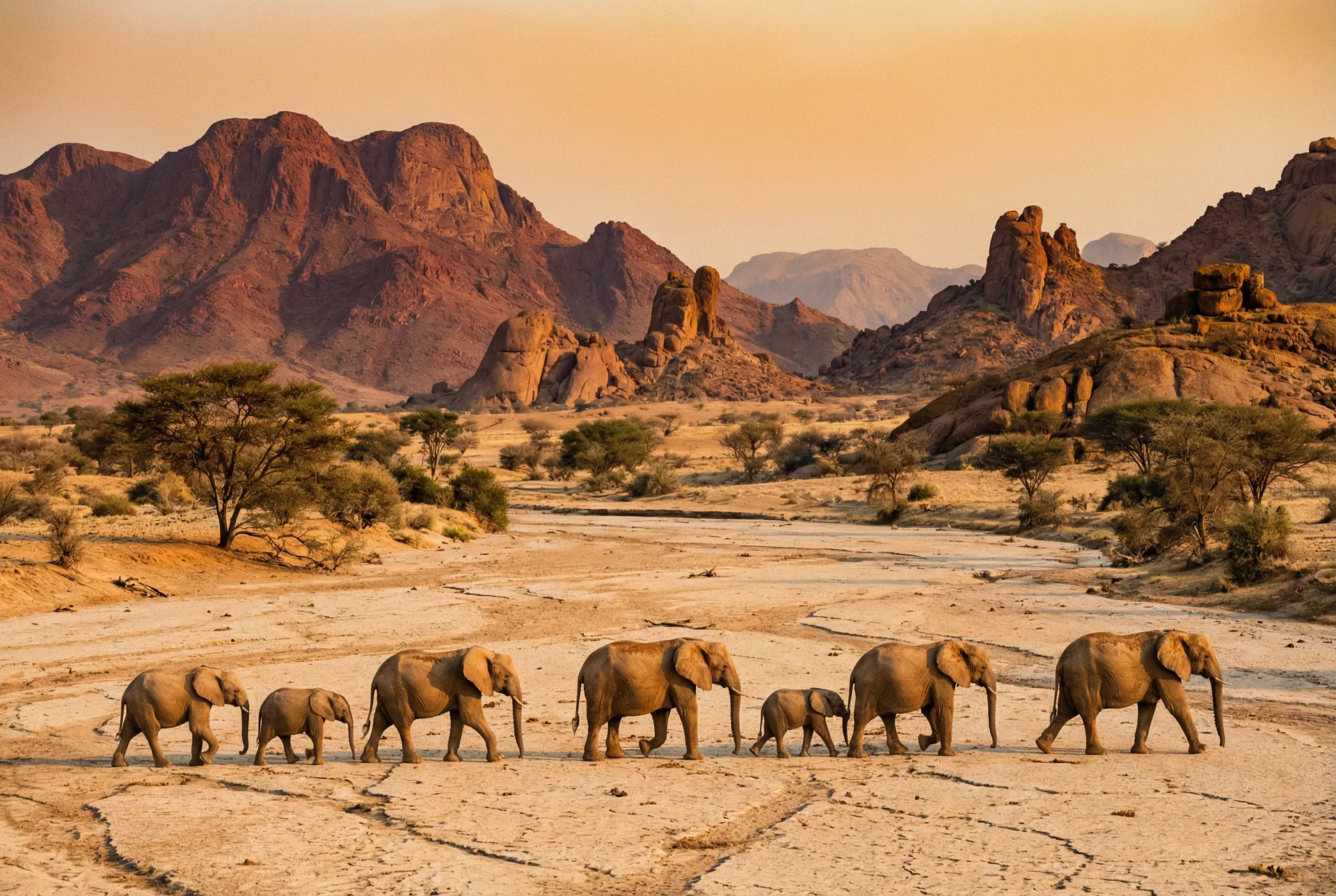
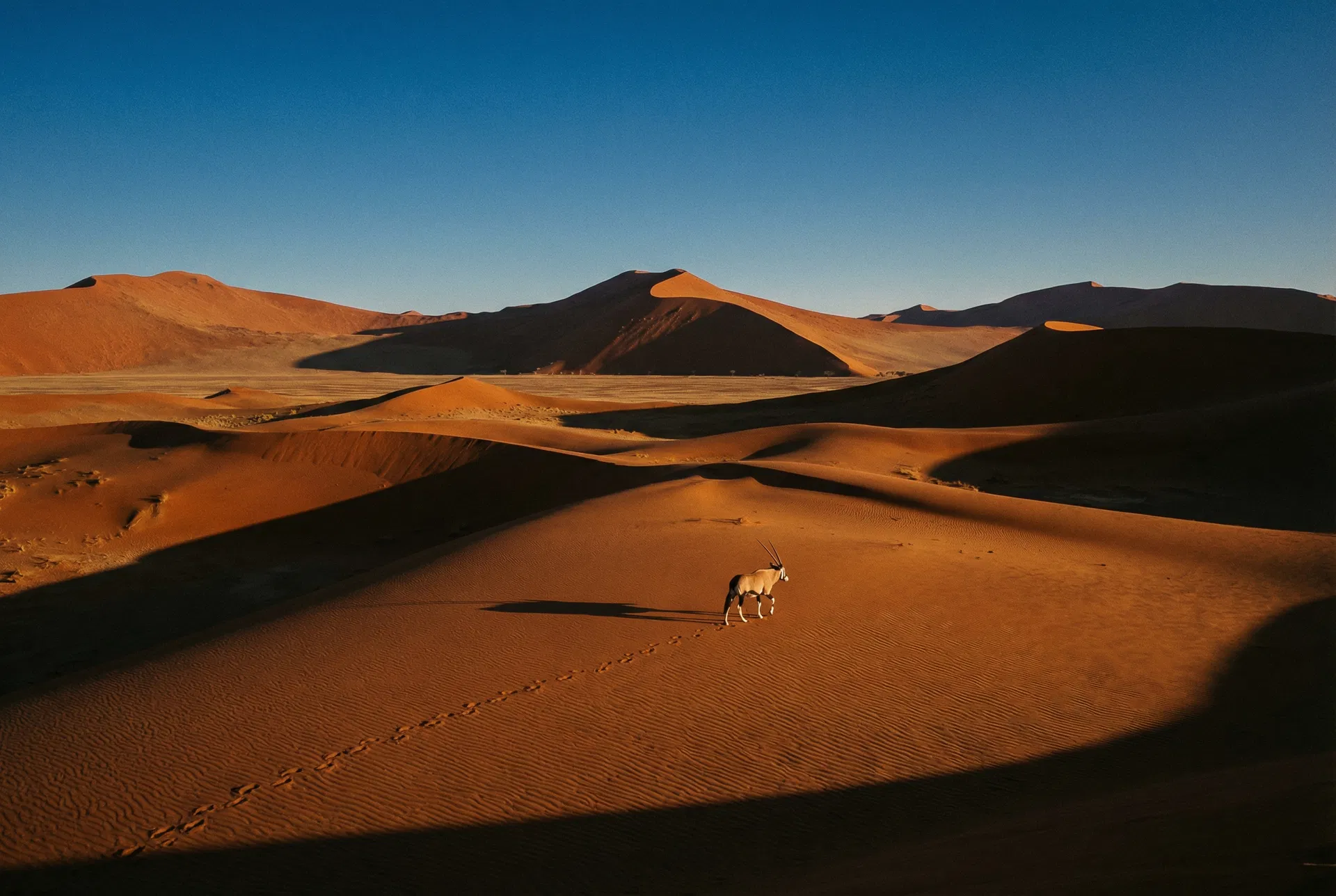
Etosha National Park is a stronghold for some of Africa's most iconic and endangered species. The park is home to a significant population of black rhinoceros, making it one of the best places in the world to see this critically endangered animal. Etosha's elephants are among the largest in Africa, known for their impressive size, which is attributed to the nutrient-rich soil. The park's predators are well-represented, with healthy populations of lion, leopard, and cheetah. Other common sightings include giraffe, Burchell's zebra, springbok, blue wildebeest, and the majestic gemsbok (oryx), Namibia's national animal. The western part of the park, characterized by its dolomite hills, is the exclusive home of the Hartmann's mountain zebra. Birdlife is equally prolific, with over 340 species recorded. During the wet season, the pan becomes a breeding ground for flamingos, while other notable species include the kori bustard, the world's heaviest flying bird, and the colorful European bee-eater.
Best Time to Visit
The best time to visit Etosha National Park is during the dry season, from May to October. During these months, the climate is pleasant with minimal rainfall, and the vegetation is sparse, making wildlife easier to spot. The scarcity of water forces animals to congregate around the park's waterholes, providing exceptional and predictable game viewing opportunities. This is the peak season for safari-goers, so booking accommodation in advance is highly recommended. The wet season, from November to April, transforms the landscape into a lush, green paradise. While wildlife viewing can be more challenging due to the dense vegetation and dispersed water sources, this is the best time for birdwatching, as migratory birds arrive in large numbers and the Etosha Pan fills with water, attracting thousands of flamingos. The wet season also coincides with the calving season for many antelope species, offering the chance to see young animals.
Safari Experience
The safari experience in Etosha is unique and incredibly rewarding. The park is renowned for its floodlit waterholes at the main rest camps—Okaukuejo, Halali, and Namutoni. These waterholes provide a theatrical spectacle of wildlife, especially at night, where visitors can sit in comfort and watch a continuous parade of animals coming to drink. Game drives are the primary activity, and the park's excellent road network makes it accessible for self-drive safaris in a 2WD vehicle, although a 4x4 is recommended for the wet season. The open terrain and numerous waterholes along the edge of the pan make for fantastic photographic opportunities. Unlike many other parks, walking safaris and night drives are not widely available, with the focus remaining on the exceptional game viewing from vehicles and the camp waterholes.
Landscape and Ecosystem
The landscape of Etosha is dominated by the immense Etosha Pan, a saline desert that covers nearly a quarter of the park. This ancient, dried-up lakebed creates a shimmering, white horizon that is both surreal and beautiful. Surrounding the pan is a variety of vegetation types, including mopane woodland, acacia-studded grasslands, and dwarf shrub savanna. To the west, the landscape becomes more rugged with the presence of dolomite hills, which create a different ecological zone and support a unique range of wildlife, including the Hartmann's mountain zebra. The park's ecosystem is a delicate balance of desert, savanna, and woodland, all centered around the life-giving waterholes that sustain its incredible biodiversity.
Safari Activities
Etosha's safari activities are centered around its incredible wildlife. The main activities include:
- Game Drives: Explore the park's extensive network of roads on self-drive or guided game drives to discover the diverse wildlife that congregates around the waterholes.
- Waterhole Viewing: Spend time at the floodlit waterholes at the main rest camps, which offer a comfortable and rewarding way to observe wildlife, especially after dark.
- Birdwatching: With over 340 species, Etosha is a birdwatcher's paradise, particularly during the wet season when migratory birds are present.
- Photography: The park's unique landscapes and abundant wildlife provide endless opportunities for stunning photography.
Where It Is Located
Etosha National Park is situated in northwestern Namibia, approximately 400 kilometers (250 miles) north of the capital city, Windhoek. The park is easily accessible by road and has two main entrance gates: the Anderson Gate in the south and the Von Lindequist Gate in the east. The nearest major town to the Anderson Gate is Outjo, while Tsumeb is the closest to the Von Lindequist Gate. Most visitors arrive via Hosea Kutako International Airport (WDH) in Windhoek and then travel to the park by road, which takes approximately four to five hours.
Who This Destination Is Best For
Etosha National Park is an ideal destination for a wide range of travelers:
- First-Time Safari-Goers: The park's accessibility, excellent infrastructure, and abundant wildlife make it a perfect introduction to the African safari experience.
- Self-Drive Enthusiasts: The well-maintained road network allows for the freedom and flexibility of a self-drive safari.
- Photographers: The dramatic landscapes, high concentration of wildlife, and floodlit waterholes offer unparalleled photographic opportunities.
- Families: Etosha is a malaria-free destination with a variety of accommodation options, making it a safe and enjoyable choice for families with children.
- Wildlife Enthusiasts: The opportunity to see endangered species like the black rhino, as well as a vast array of other animals, makes Etosha a must-visit for any wildlife lover.