_A journey into the Namib Desert is a journey into a realm of surreal beauty and profound solitude. As one of the oldest and most arid deserts on Earth, the Namib stretches for over 2,000 kilometers along the Atlantic coastline of Namibia, a vast expanse of towering dunes, gravel plains, and rugged mountains that have captivated travelers for centuries. This is a land of dramatic contrasts, where the fiery red-orange hues of the world's tallest sand dunes meet the stark white of ancient, cracked clay pans and the deep blue of the boundless sky. The Namib's allure lies not only in its breathtaking landscapes but also in its remarkable ability to sustain life in the most extreme conditions. It is a place that invites introspection and adventure in equal measure, offering a safari experience that is as unique as it is unforgettable._
Destination Overview
The Namib Desert, located in Namibia, is a destination that defies conventional safari expectations. It is a place where the silence is as profound as the scenery is spectacular. Travelers are drawn to the Namib to witness the iconic, star-shaped dunes of Sossusvlei, which are among the highest in the world, and to explore the hauntingly beautiful Deadvlei, a white clay pan dotted with the skeletal remains of ancient camel thorn trees. The desert's ever-shifting sands, sculpted by the wind into mesmerizing patterns, create a photographer's paradise, with the changing light of sunrise and sunset painting the landscape in a palette of fiery colors. Beyond the dunes, the Namib encompasses a diverse range of environments, from the rugged canyons of the Naukluft Mountains to the desolate beauty of the Skeleton Coast, where the desert meets the sea. The Namib is not just a destination; it is an experience that challenges perceptions and leaves an indelible mark on the soul.
Wildlife Highlights
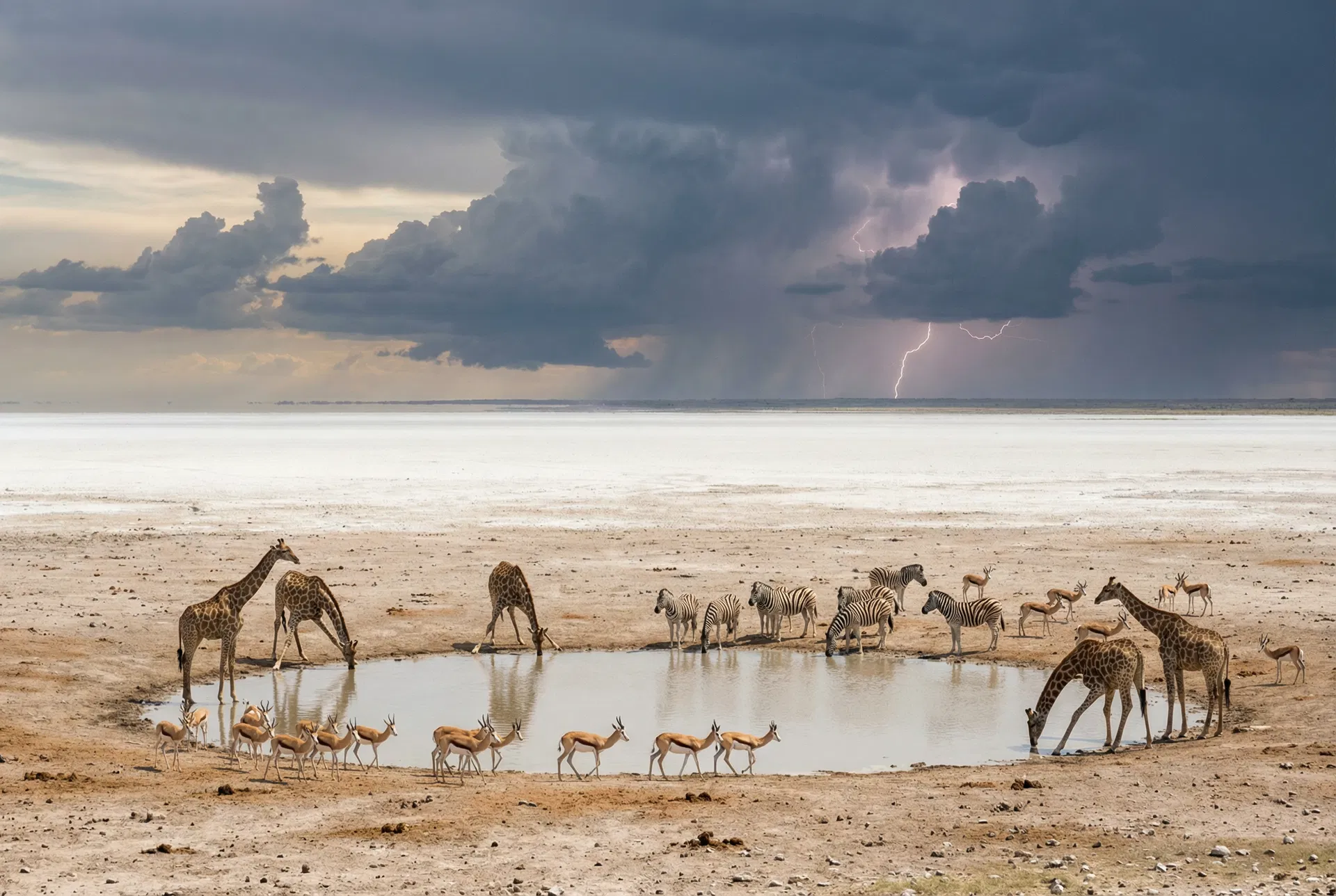
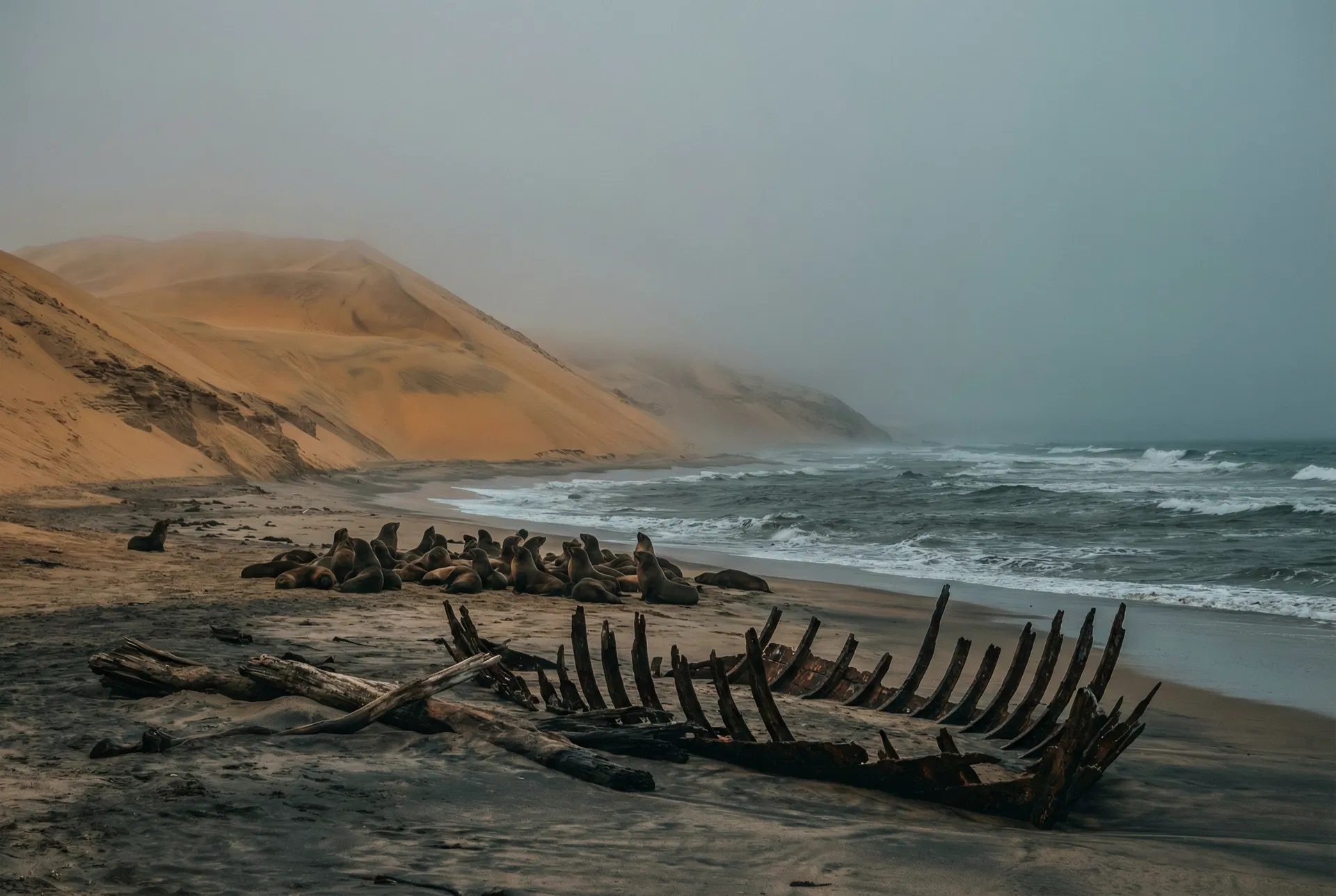
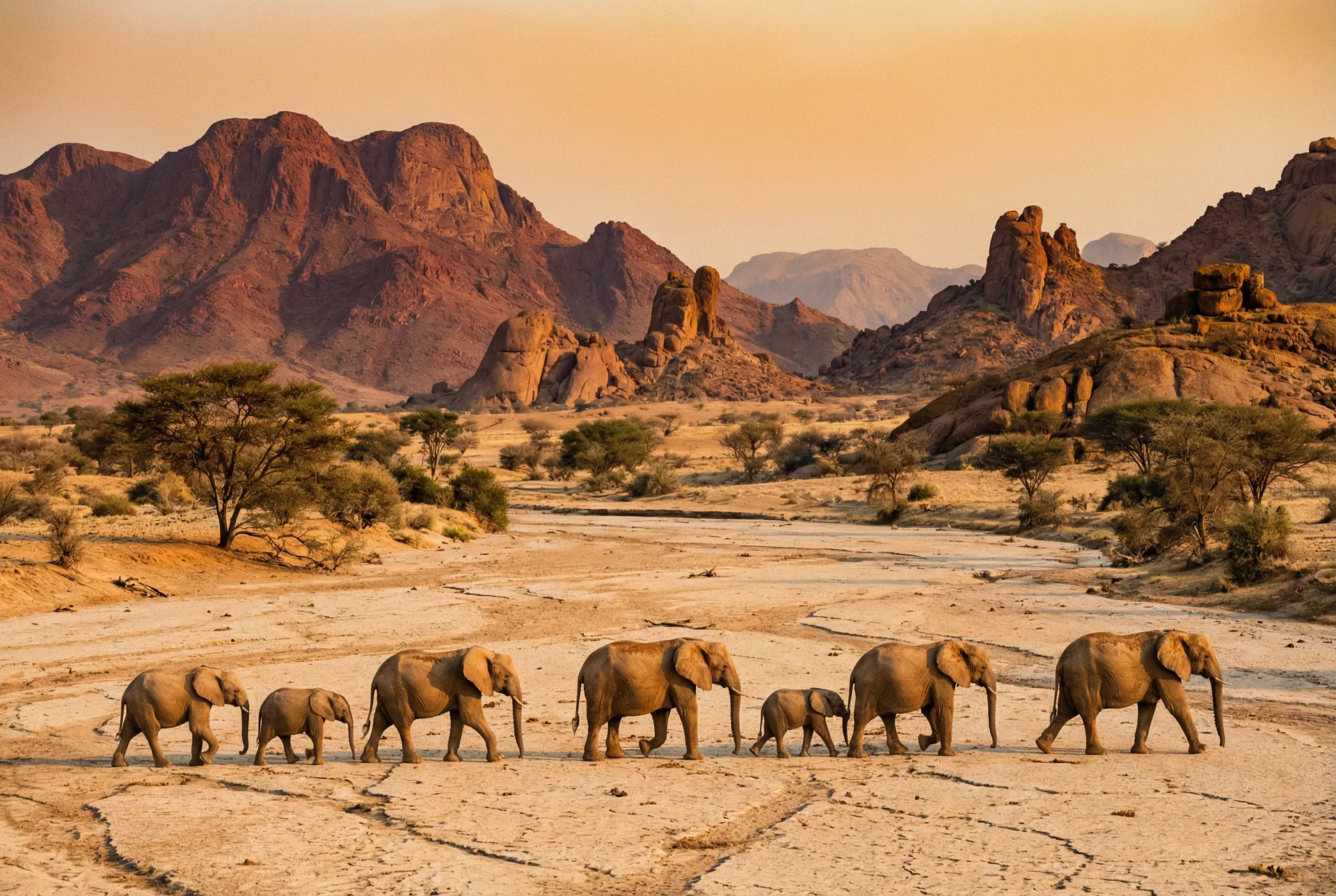
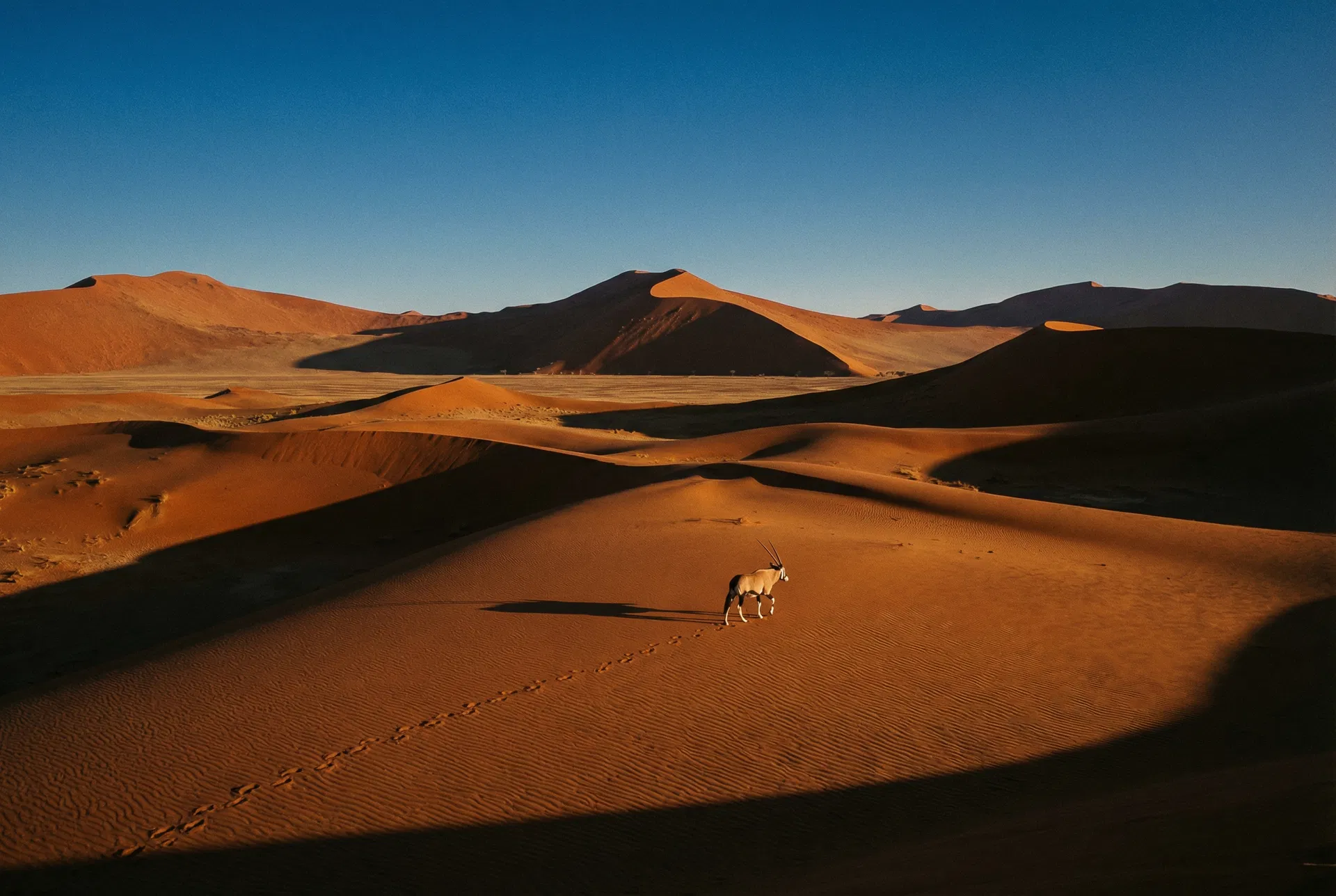
While the Namib Desert may appear barren at first glance, it is home to a fascinating array of wildlife that has adapted to survive in this harsh environment. The desert’s inhabitants are masters of survival, showcasing nature's ingenuity in the face of extreme adversity. Among the most iconic of these are the desert-adapted elephants, which have longer legs and larger feet than their savanna counterparts, allowing them to traverse vast distances in search of water and vegetation. Similarly, the elusive desert-adapted black rhino and lions have carved out a niche in this arid landscape. The striking oryx, or gemsbok, with its long, rapier-like horns, is a common sight, as are springbok, kudu, and the diminutive Damara dik-dik. The coastal regions of the Namib offer a different kind of wildlife experience, with the Skeleton Coast home to massive colonies of Cape fur seals, while the nutrient-rich waters of the Atlantic attract dolphins and whales. The desert is also a haven for smaller, more unusual creatures, such as the Namib sand gecko with its translucent skin and webbed feet, the Peringuey’s adder that can bury itself in the sand in seconds, and the Namib Desert beetle, which has evolved a remarkable method of harvesting water from the fog that rolls in from the coast. Birdlife is also surprisingly rich, with the endemic dune lark being a particular highlight for birdwatchers.
Best Time to Visit
The best time to visit the Namib Desert is during the dry winter season, which runs from May to October. During these months, the temperatures are cooler and more pleasant for exploring the desert, with daytime highs averaging between 20°C and 25°C (68°F and 77°F). The lack of rain means that wildlife tends to congregate around the few available water sources, making for excellent game viewing opportunities. The clear, crisp skies of the winter months also provide the perfect conditions for stargazing, with the Namib being one of the best places in the world to witness the full splendor of the Milky Way. The shoulder seasons of April and November can also be a good time to visit, with fewer crowds and pleasant weather. The summer months, from December to March, are the hottest and wettest time of the year in the Namib. While the rains can bring a flush of green to the desert and attract a variety of birdlife, the high temperatures can make daytime activities uncomfortable. The fog that rolls in from the Atlantic coast is a year-round phenomenon and is a vital source of moisture for the desert's flora and fauna.
Safari Experience
A safari in the Namib Desert is a unique and varied experience, offering a departure from the traditional game drives of other African safari destinations. The focus here is as much on the dramatic landscapes and the sense of solitude as it is on the wildlife. Game drives are still a popular activity, but they are often combined with other experiences that allow for a more intimate connection with the desert environment. Guided walks through the dunes and canyons provide an opportunity to appreciate the smaller details of the desert ecosystem, from the tracks of a tiny beetle in the sand to the intricate patterns of a wind-sculpted rock. Hot air ballooning over the sand sea at sunrise is a truly magical experience, offering a breathtaking perspective of the vastness and beauty of the desert. For the more adventurous, there is the opportunity to climb some of the world's highest dunes, such as Big Daddy or Dune 45, for panoramic views of the surrounding landscape. Sandboarding and quad biking on the dunes are also popular activities, offering a thrilling way to experience the desert. Along the coast, boat trips and kayaking excursions provide the chance to see dolphins, whales, and the resident seal colonies. The Namib is also a place for quiet contemplation, and simply sitting and watching the changing light and colors of the desert is an experience in itself.
Landscape and Ecosystem
The Namib Desert is a landscape of breathtaking scale and diversity, a testament to the power of time and the forces of nature. The desert is characterized by its vast sand seas, which are home to some of the tallest and most spectacular sand dunes in the world. These dunes, which can reach heights of over 300 meters, are constantly being reshaped by the wind, creating a mesmerizing and ever-changing landscape. The color of the dunes, which ranges from a pale apricot to a deep, rusty red, is due to the presence of iron oxide in the sand. In addition to the sand seas, the Namib also encompasses vast gravel plains, rugged mountain ranges, and deep canyons. The Kuiseb River, which flows through the desert, forms a natural boundary between the southern dune sea and the northern gravel plains. The desert's ecosystem is a fragile and complex one, with life sustained by the fog that rolls in from the Atlantic coast. This fog, which can penetrate up to 50 kilometers inland, provides a vital source of moisture for a wide variety of plants and animals. The ancient Welwitschia mirabilis, a plant that can live for over 1,500 years, is a prime example of the unique and highly adapted flora of the Namib. The desert's ecosystem is a delicate and interconnected one, and its preservation is of the utmost importance.
Safari Activities
The Namib Desert offers a wide range of activities that cater to a variety of interests and fitness levels. For those seeking adventure, there is the opportunity to climb the iconic dunes of Sossusvlei, such as Dune 45, Big Daddy, or the even more challenging Big Mama. The views from the top are well worth the effort, offering a 360-degree panorama of the surrounding sand sea. Sandboarding and quad biking on the dunes are also popular activities, providing a thrilling way to experience the desert landscape. For a more serene experience, hot air ballooning over the dunes at sunrise is a must-do, offering a breathtaking perspective of the desert as it awakens. Guided nature walks with expert local guides provide a fascinating insight into the desert's unique flora and fauna, from the smallest insects to the largest mammals. Stargazing in the Namib is an unforgettable experience, with the clear, unpolluted skies offering a dazzling display of stars, planets, and constellations. The coastal town of Swakopmund is the adventure capital of Namibia, offering a wide range of activities, including skydiving, scenic flights over the Skeleton Coast, and boat trips to see dolphins and seals. Cultural visits to local communities, such as the Himba people, can also be arranged, providing a fascinating insight into the traditional way of life in this remote and beautiful part of the world.
Where It Is Located
The Namib Desert is located along the Atlantic coast of Namibia, in southwestern Africa. It stretches for over 2,000 kilometers, from the Olifants River in South Africa to the San Nicolau River in Angola. The main gateway to the Namib Desert is the town of Sesriem, which is located about a four to five-hour drive from both Windhoek, the capital of Namibia, and the coastal town of Swakopmund. Hosea Kutako International Airport (WDH) in Windhoek is the main international airport in Namibia, and from there, visitors can either rent a 4x4 vehicle and drive to Sesriem or take a light aircraft transfer to one of the desert lodges. The roads in Namibia are generally well-maintained, but a 4x4 vehicle is recommended for exploring the desert, especially the final stretch of road to Sossusvlei and Deadvlei. The coastal towns of Swakopmund and Walvis Bay also serve as popular bases for exploring the northern parts of the Namib Desert and the Skeleton Coast.
Who This Destination Is Best For
The Namib Desert is a destination that will appeal to a wide range of travelers, but it is particularly well-suited to those with a love of dramatic landscapes, photography, and adventure. Photographers will be in their element in the Namib, with the ever-changing light and colors of the desert providing endless opportunities for stunning images. Adventure seekers will find plenty to keep them occupied, from climbing the world's highest dunes to sandboarding, quad biking, and skydiving. Luxury travelers are well-catered for, with a number of exclusive lodges offering a high level of comfort and service in the heart of the desert. The Namib is also a great destination for families, with a range of activities that will appeal to all ages. First-time safari-goers may find the Namib to be a good introduction to Africa, as it offers a unique and unforgettable experience that is different from the traditional wildlife-focused safaris of other countries. The Namib is also a great destination for honeymooners and those seeking a romantic getaway, with the vast, empty landscapes and star-filled skies providing a sense of peace and tranquility that is hard to find elsewhere.