Destination Overview
Damaraland, a vast and untamed wilderness in the northwest of Namibia, is a destination that captivates with its raw, dramatic beauty and profound sense of ancient history. It is a land of stark contrasts, where terracotta mountains rise from arid plains, and desert-adapted wildlife roams freely across a landscape that has remained largely unchanged for millennia. Named after the Damara people who have inhabited this region for thousands of years, Damaraland offers a unique safari experience that is as much about the soul-stirring landscapes and cultural heritage as it is about the wildlife. Travelers are drawn to Damaraland to witness the resilience of life in one of the world’s oldest and most unforgiving environments, to explore ancient rock art sites that offer a glimpse into a forgotten world, and to experience a sense of solitude and adventure that is increasingly rare in our modern world. It is a destination for the discerning traveler, one who seeks a deeper connection with nature and a more authentic and immersive safari experience.
Wildlife Highlights
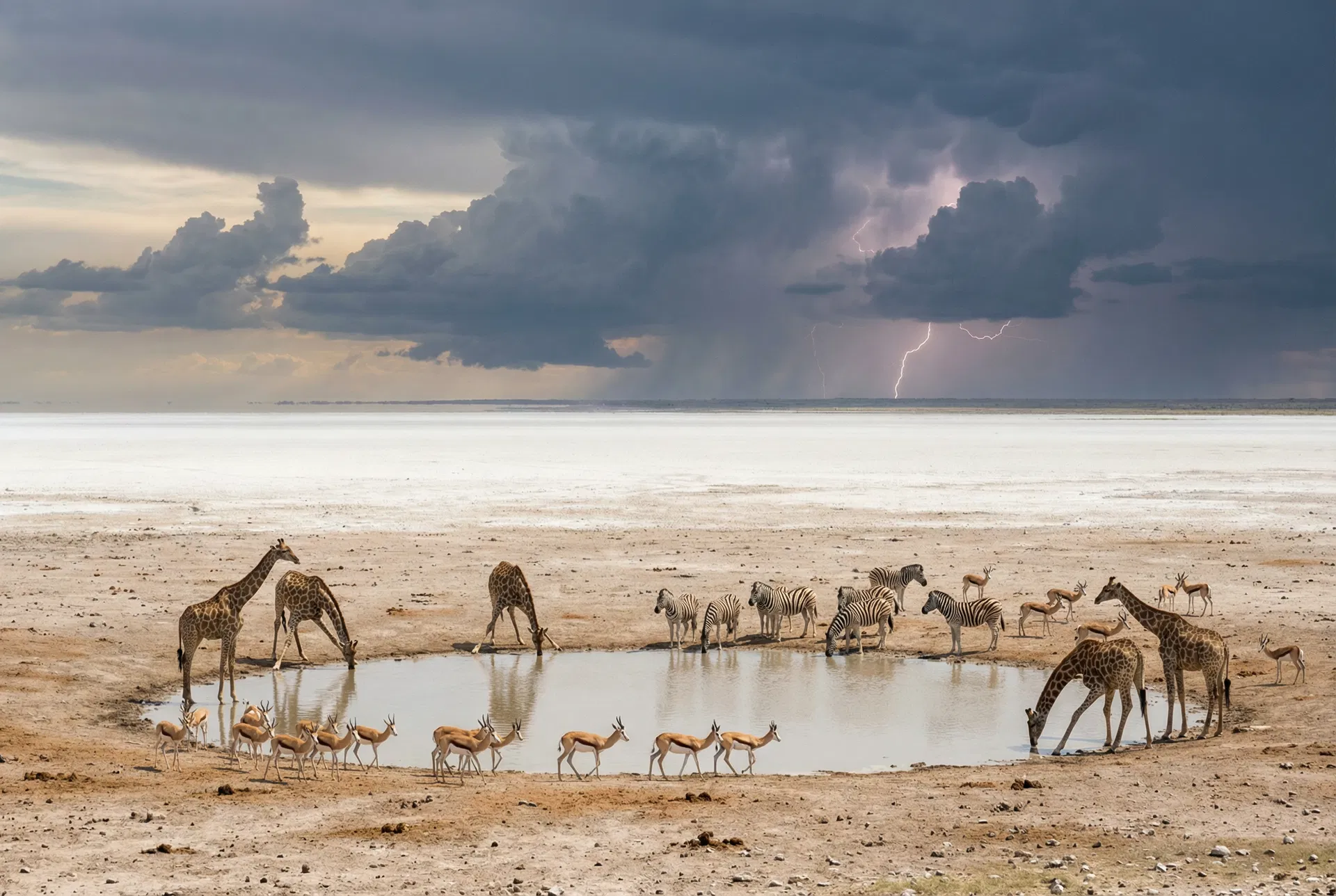
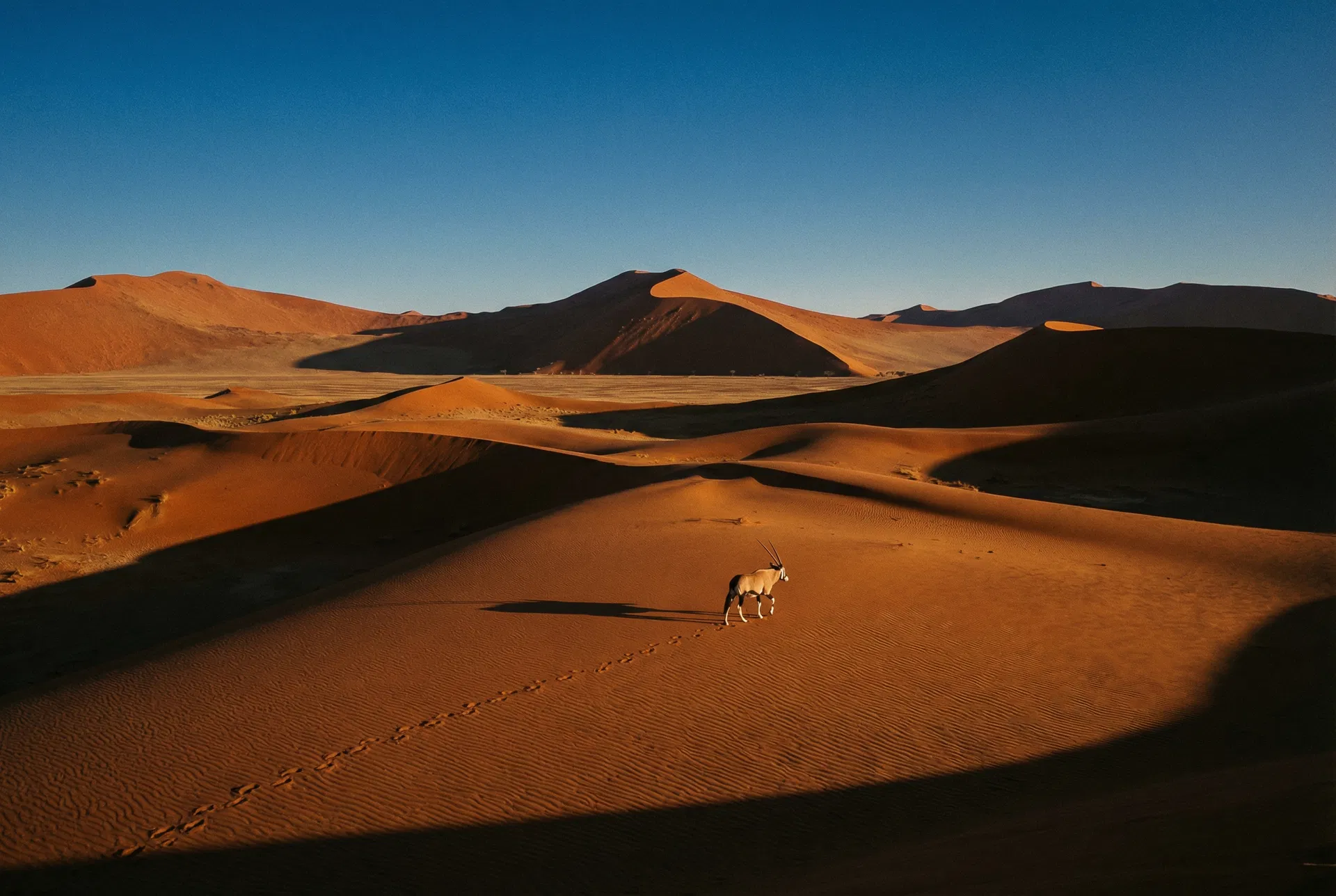
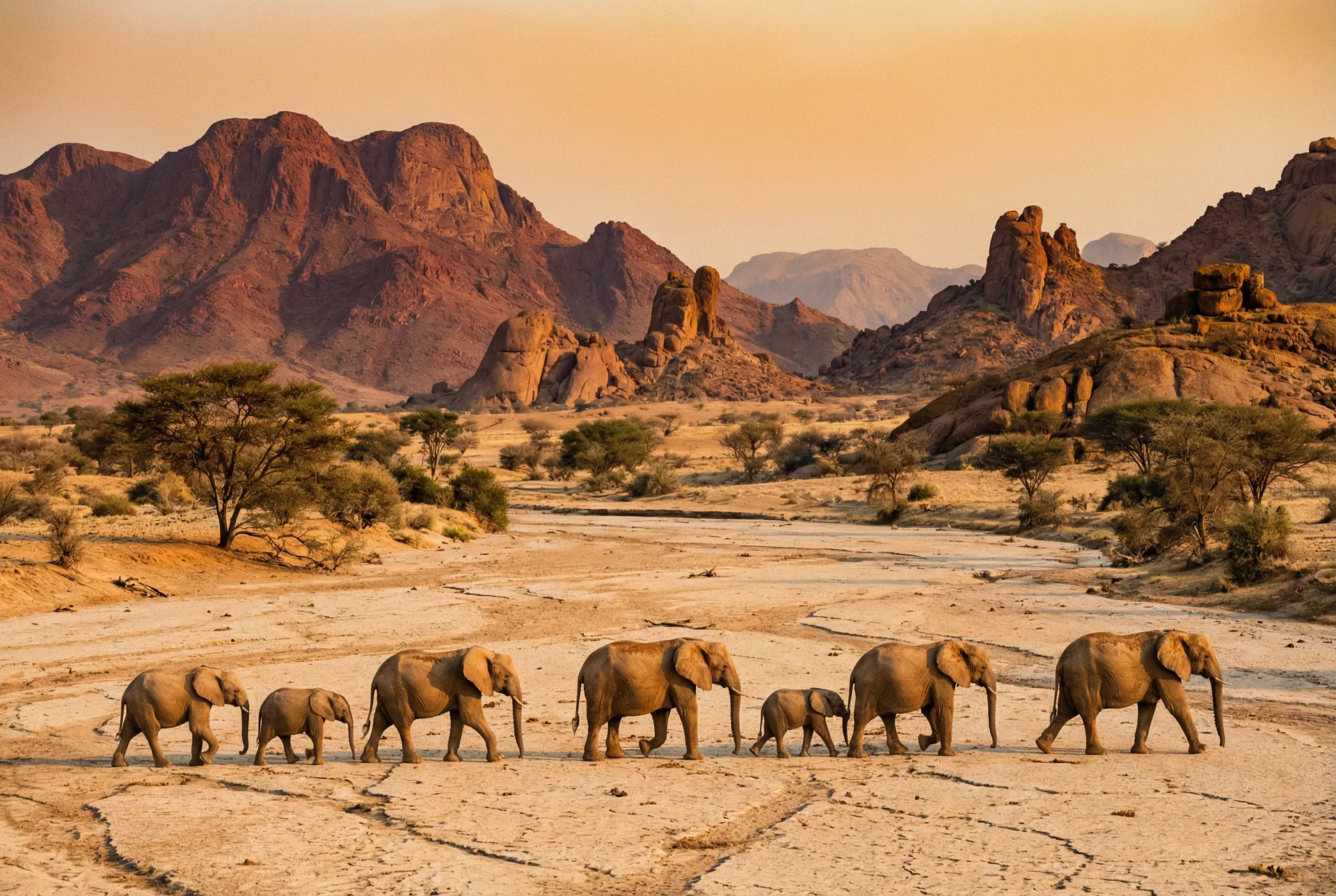
Damaraland is renowned for its unique desert-adapted wildlife, species that have evolved remarkable survival skills to thrive in this harsh environment. The most iconic of these are the desert-adapted elephants, which are smaller and have larger feet than their savanna counterparts, allowing them to travel long distances in search of water. Tracking these gentle giants as they navigate the dry riverbeds is a truly unforgettable experience. The region is also a stronghold for the critically endangered black rhino, and community-based conservation efforts have been instrumental in protecting these magnificent creatures. Other wildlife that can be seen in Damaraland includes gemsbok (oryx), springbok, greater kudu, Hartmann's mountain zebra, and giraffe. Predators such as lions, leopards, and cheetahs are also present, though they are more elusive and sightings are less common. Birdwatching in Damaraland is also excellent, with a chance to see endemic species such as the Monteiro's hornbill, Ruppell's parrot, white-tailed shrike, and the rockrunner.
Best Time to Visit
Damaraland can be visited year-round, but the best time to travel is during the dry winter months, from June to September. During this period, the days are warm and sunny, with average temperatures around 28°C (82°F), while the nights can be cold. With little to no rainfall, the vegetation is sparse, making it easier to spot wildlife as they congregate around the few remaining water sources. This is the peak season for safari activities, and the clear skies are perfect for stargazing.
The shoulder seasons of April to May (autumn) and October to November (spring) are also excellent times to visit. The temperatures are pleasant, and the landscape begins to show signs of life with the approaching rains. The summer months, from December to March, are the rainy season, with short, intense downpours that can transform the arid landscape into a lush, green paradise. While the heat can be intense, with temperatures soaring up to 40°C (104°F), this is a beautiful time to witness the desert in bloom.
Safari Experience
The safari experience in Damaraland is unlike any other in Africa. It is a more rugged and adventurous experience, focused on tracking wildlife in vast, open landscapes. Game drives are the primary activity, typically conducted in open 4x4 vehicles that are well-suited to the rocky terrain. These drives often follow the dry riverbeds, where wildlife congregates in search of water and vegetation. The sense of discovery is palpable as you track desert-adapted elephants or search for the elusive black rhino.
Walking safaris are also a popular activity in Damaraland, offering a more intimate and immersive way to experience the desert environment. Led by experienced guides, these walks provide an opportunity to learn about the smaller details of the ecosystem, from the tracks of insects to the medicinal uses of plants. The silence and solitude of the desert are truly profound when experienced on foot.
Landscape and Ecosystem
Damaraland is a land of dramatic and diverse landscapes. The region is characterized by vast, open plains, rugged mountains, and deep gorges. The geology of Damaraland is particularly fascinating, with ancient rock formations that tell the story of the earth's history. The Brandberg, Namibia's highest mountain, dominates the southern part of the region, while the Spitzkoppe, often referred to as the "Matterhorn of Africa," is a prominent landmark in the west. The landscape is dotted with granite koppies, which provide a habitat for a variety of wildlife.
The ecosystem of Damaraland is a testament to the resilience of life. The region is a semi-desert, with sparse vegetation that is adapted to the arid conditions. The ephemeral rivers, which flow only after heavy rains, are the lifeblood of the ecosystem, providing water for wildlife and supporting a narrow band of vegetation along their banks. The Huab and Aba-Huab are two of the most important river systems in the region.
Safari Activities
In addition to game drives and walking safaris, Damaraland offers a range of other activities for visitors to enjoy. One of the highlights is visiting the ancient rock art sites at Twyfelfontein, a UNESCO World Heritage Site. Here, you can see thousands of rock engravings and paintings created by the San people over a period of 6,000 years. These ancient artworks provide a fascinating insight into the beliefs and way of life of these early hunter-gatherers.
Cultural visits to local Damara communities are also a rewarding experience. These visits provide an opportunity to learn about the traditions and customs of the Damara people, who have a deep connection to this land. Other activities available in Damaraland include birdwatching, stargazing, and scenic flights over the dramatic landscape.
Where It Is Located
Damaraland is located in the northwestern part of Namibia, between the Skeleton Coast to the west and Etosha National Park to the east. The main gateway to the region is the town of Khorixas. The nearest international airport is Hosea Kutako International Airport (WDH) in Windhoek, the capital of Namibia. From Windhoek, it is a drive of approximately 7 hours to Damaraland. Alternatively, you can take a chartered flight to one of the airstrips in the region. Many visitors combine a visit to Damaraland with a trip to Etosha National Park, which is a drive of about 4 hours to the east.
Who This Destination Is Best For
Damaraland is a destination that will appeal to a wide range of travelers. It is particularly well-suited for adventurous travelers who are looking for a more rugged and off-the-beaten-path safari experience. The sense of solitude and adventure is a major draw for those who want to escape the crowds and immerse themselves in nature.
Photographers will be in their element in Damaraland, with its dramatic landscapes, unique wildlife, and incredible light. The opportunities for landscape and wildlife photography are endless.
Luxury travelers are also well-catered for in Damaraland, with a number of exclusive lodges and camps that offer a high level of comfort and service. These lodges are often located in private concessions, providing an exclusive and intimate safari experience.
Repeat safari-goers who have already experienced the more traditional safari destinations of East and Southern Africa will appreciate the unique and different experience that Damaraland has to offer. It is a destination that will challenge your perceptions of what a safari can be.
Finally, Damaraland is a destination for anyone who has a deep appreciation for nature, culture, and history. It is a place that will leave a lasting impression on all who visit.