Destination Overview
South Luangwa National Park, located in eastern Zambia, is widely regarded as one of the world’s greatest wildlife sanctuaries. [1] This iconic park is renowned for its exceptional wildlife densities and the raw, untouched beauty of its wilderness. At the heart of this 9,050-square-kilometer reserve lies the life-giving Luangwa River, a meandering waterway that carves its path through the valley, leaving behind a series of oxbow lagoons. These lagoons, combined with the river itself, create a lush and fertile environment that supports an astonishing concentration of animals, making it one of the most rewarding safari destinations in Africa. [1] The park is also celebrated as the birthplace of the walking safari, a tradition pioneered by the legendary conservationist Norman Carr in the 1950s. [2] This immersive experience allows travelers to connect with the African bush on a deeply personal level, tracking wildlife on foot under the guidance of expert local guides.
Wildlife Highlights
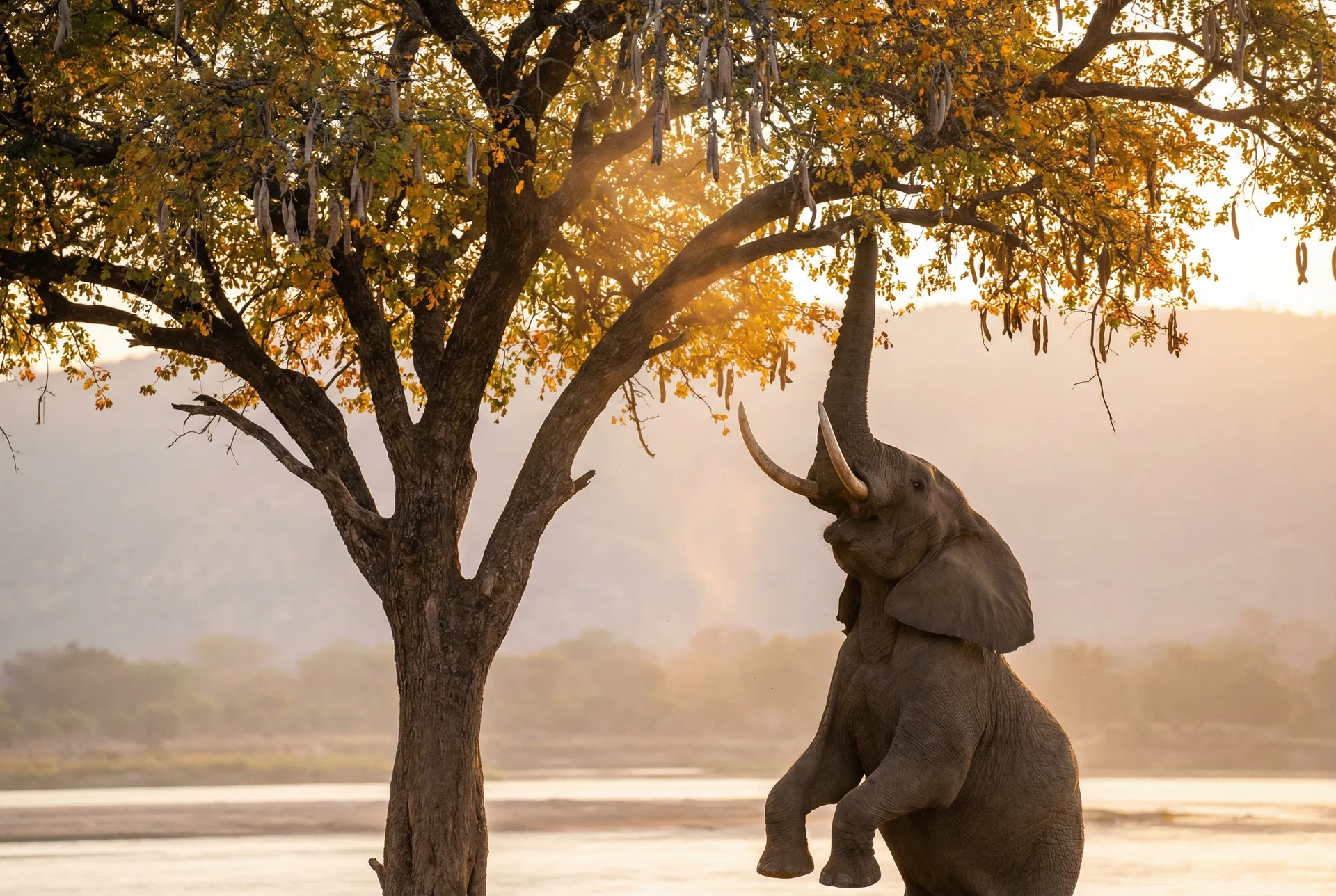
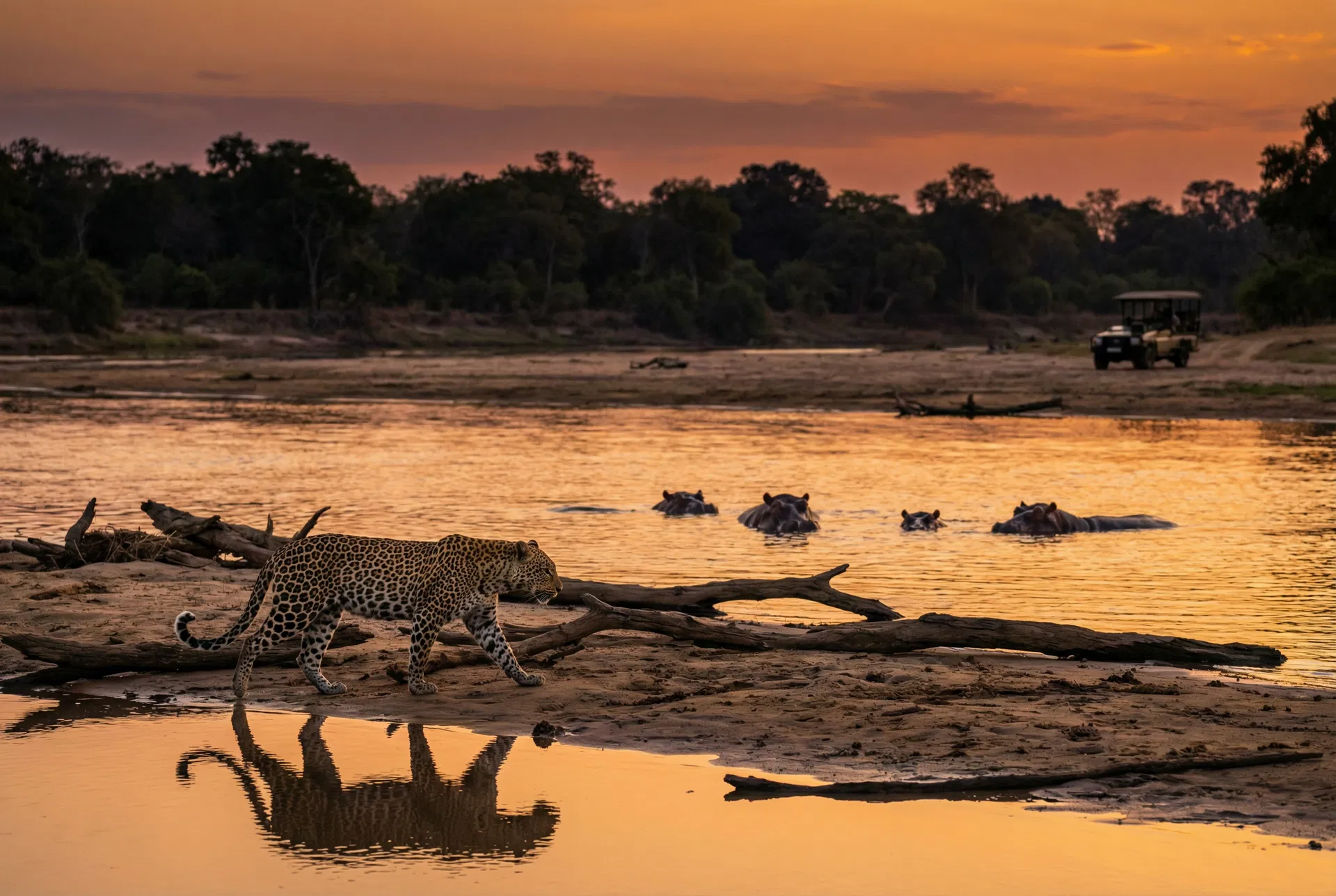
South Luangwa is a haven for wildlife enthusiasts, boasting an impressive diversity of both mammals and birds. The park is home to over 60 mammal species, including four of the "Big Five" (lion, leopard, elephant, and buffalo). [1] It is particularly famous for its dense population of leopards, which are frequently spotted during both day and night game drives. Large prides of lions are also a common sight, and the park is a stronghold for the African wild dog, one of the continent’s most endangered carnivores. [3] Elephants and buffalo are abundant, often seen in large herds along the riverbanks. The park is also home to two endemic subspecies: the Thornicroft's giraffe, distinguished by its unique coat pattern, and the Cookson's wildebeest. [2] Other resident wildlife includes hippos, crocodiles, zebras, and a variety of antelope species. The birdlife is equally spectacular, with over 400 recorded species, including numerous raptors, waterbirds, and migratory species that flock to the park during the summer months. [1]
Best Time to Visit
The best time to visit South Luangwa National Park for wildlife viewing is during the dry season, which runs from April to October. [1] During these months, the vegetation is less dense, and animals congregate around the Luangwa River and its lagoons, making them easier to spot. The peak of the dry season, from July to October, offers the most exceptional game viewing opportunities. The days are warm and sunny, while the nights can be cool. The "emerald season," from November to March, transforms the park into a lush, green paradise. While some roads may become impassable due to the rains, this is the best time for birdwatching, as migratory birds arrive in large numbers. It is also a beautiful time to witness the park’s stunning landscapes in full bloom.
Safari Experience
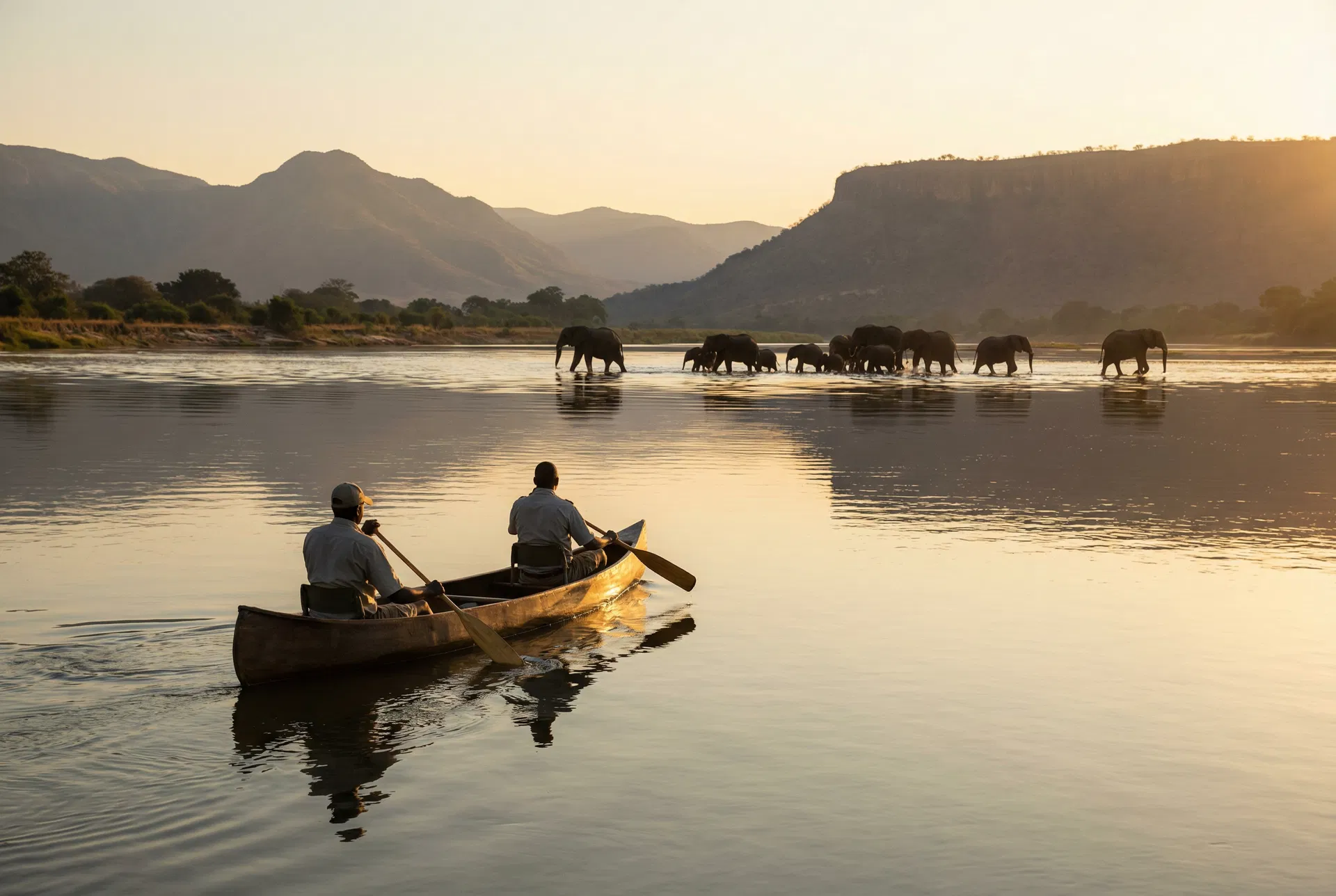
A safari in South Luangwa offers a truly authentic and immersive wilderness experience. The park is most famous for its walking safaris, which provide an intimate and thrilling way to explore the bush. [2] Led by highly trained and experienced guides, these walks allow you to learn about the smaller details of the ecosystem, from tracking animal spoor to identifying medicinal plants. Game drives are another popular activity, offering the chance to cover more ground and encounter a wider variety of wildlife. Many lodges also offer night drives, which provide a unique opportunity to see the park’s nocturnal animals, including the elusive leopard. The safari experience in South Luangwa is characterized by its focus on remote, unfenced camps and lodges that blend seamlessly into the natural environment, offering a sense of exclusivity and adventure.
Landscape and Ecosystem
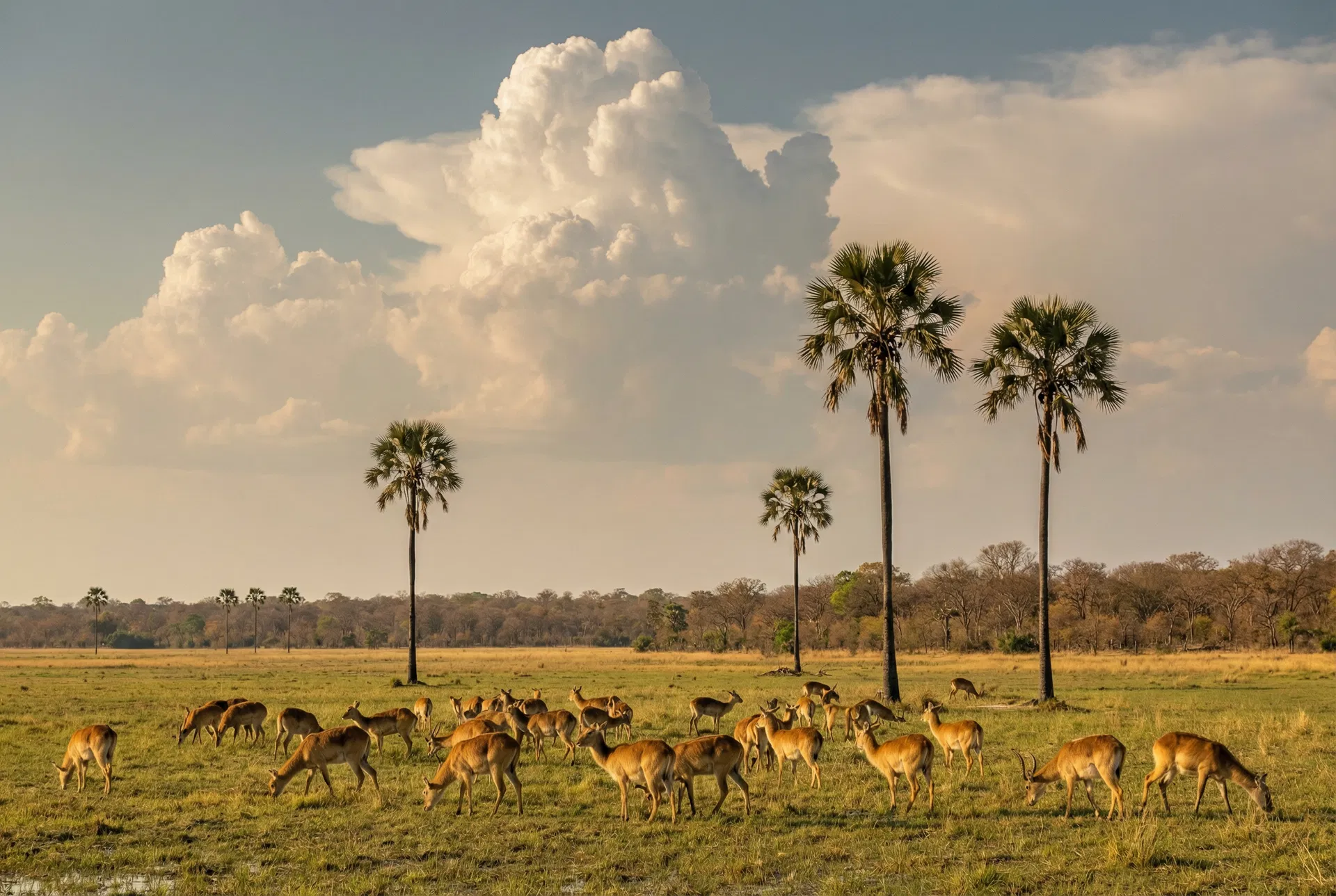
The landscape of South Luangwa is defined by the mighty Luangwa River, which has shaped the park’s geography and ecology over millennia. The river’s ever-changing course has created a mosaic of habitats, including vast floodplains, dense riverine forests, and a network of oxbow lagoons. [1] The dominant vegetation in the valley floor is mopane woodland, which thrives in the hot, dry conditions. [2] On the higher slopes of the escarpment that borders the park to the west, the vegetation transitions to miombo woodland. This diverse range of habitats supports the park’s incredible biodiversity, providing food and shelter for a wide array of wildlife. The seasonal fluctuations of the river, with its dramatic floods and subsequent dry periods, are the driving force behind the park’s dynamic ecosystem.
Safari Activities
South Luangwa offers a range of safari activities to suit every interest. The signature experience is the walking safari, which can range from a few hours to multi-day adventures, staying in rustic bush camps along the way. [2] Game drives, both during the day and at night, are a staple of any South Luangwa safari, providing excellent opportunities to see the park’s abundant wildlife. Birdwatching is another popular activity, with the park’s diverse habitats attracting a vast number of species. For those interested in photography, the incredible light and prolific wildlife make South Luangwa a photographer’s dream. Some lodges also offer cultural visits to local villages, providing an insight into the lives of the people who live on the park’s borders.
Where It Is Located
South Luangwa National Park is situated in the Luangwa Valley in eastern Zambia. [2] The main gateway to the park is the town of Mfuwe, which has an international airport with regular flights from Lusaka, the capital of Zambia, as well as from Lilongwe in neighboring Malawi. [3] From Mfuwe, it is a short drive to the park entrance and the various lodges and camps located along the Luangwa River. The park is bordered to the east by the Luangwa River and to the west by the Muchinga Escarpment, a dramatic rift valley wall that creates a stunning backdrop to the park’s landscapes. [2]
Who This Destination Is Best For
South Luangwa National Park is an ideal destination for a wide range of travelers. It is particularly well-suited for seasoned safari enthusiasts and those seeking an authentic and adventurous wildlife experience. The park’s reputation for exceptional guiding and its focus on walking safaris make it a top choice for active travelers who want to immerse themselves in the bush. Photographers will be captivated by the incredible wildlife viewing opportunities and the beautiful, ever-changing light. While the park offers a range of accommodation options, from rustic bush camps to luxurious lodges, it is generally not considered a primary destination for first-time safari-goers or families with very young children, due to its remote location and the adventurous nature of the safari experience. It is a destination for those who appreciate wild, untamed Africa at its very best.
References
[1] Zambia Tourism. "South Luangwa National Park." [https://www.zambiatourism.com/destinations/national-parks/south-luangwa-national-park/](https://www.zambiatourism.com/destinations/national-parks/south-luangwa-national-park/)
[2] Wikipedia. "South Luangwa National Park." [https://en.wikipedia.org/wiki/South_Luangwa_National_Park](https://en.wikipedia.org/wiki/South_Luangwa_National_Park)
[3] Nsefu Wildlife Conservation. [https://www.nsefu.net](https://www.nsefu.net)