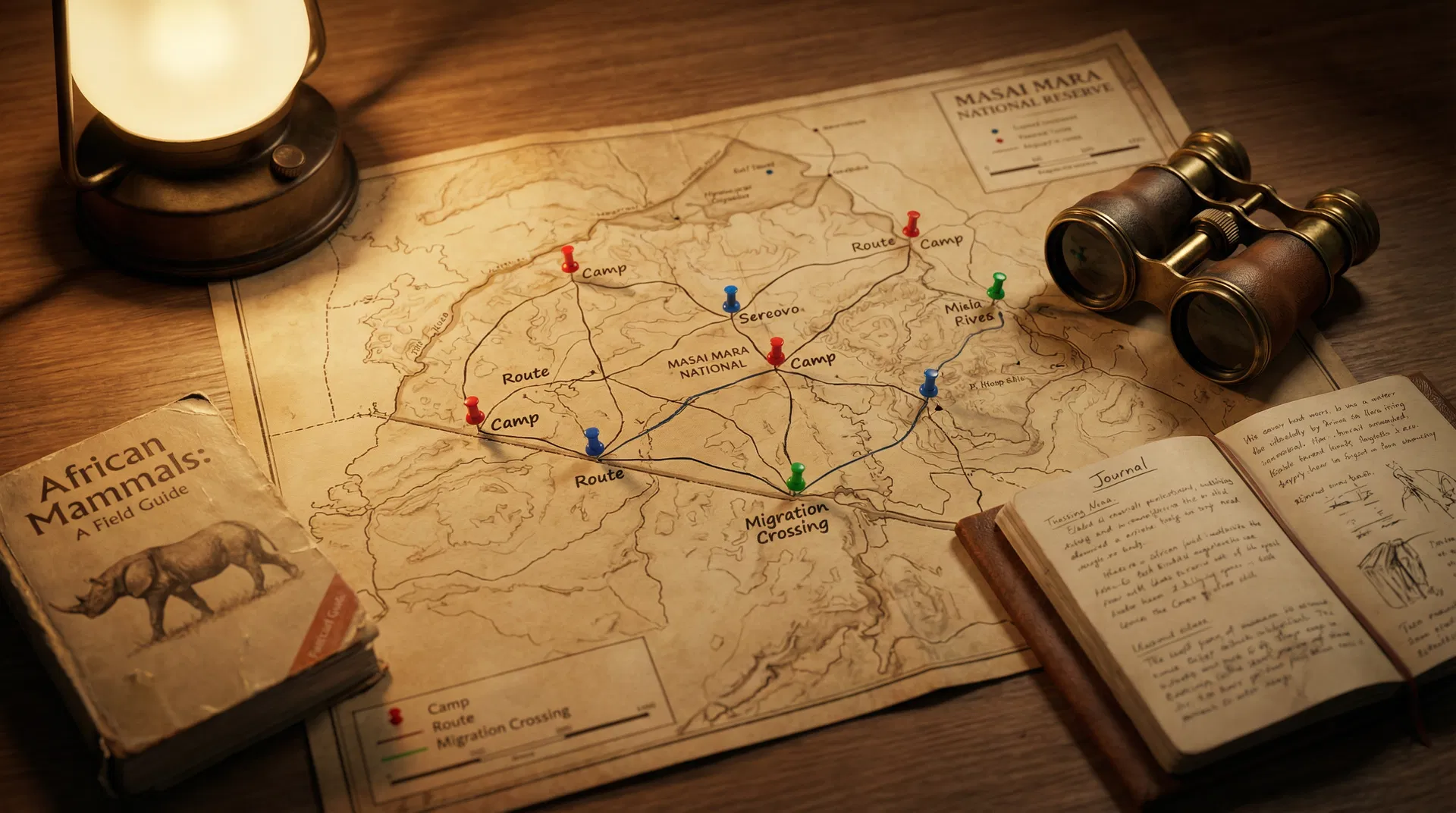
Packing for a safari? Our guide covers everything from the best luggage and clothing to essential gear and health precautions for your African adventure.
The Art of Safari Packing
Packing for an African safari requires a different approach than packing for most vacations. Weight restrictions on light aircraft, the practical demands of bush travel, and the variable climate conditions all influence what you should bring. The key principle is to pack light, pack smart, and focus on functionality over fashion.
Most safari lodges and camps have laundry services, so you can pack fewer clothes than you might expect. A well-planned safari wardrobe of mix-and-match pieces will serve you far better than an overstuffed suitcase.
Clothing Essentials
Color Guidelines
Neutral, earth-toned clothing is essential for safari. Khaki, olive, tan, and brown help you blend with the environment and avoid attracting insects. Avoid bright white clothing, which can startle wildlife and shows dirt quickly. Dark navy and black should also be avoided as they attract tsetse flies in certain regions.
Layering System
Safari temperatures can vary dramatically throughout the day. Early morning game drives often start in cool or even cold conditions, while midday temperatures can soar. A layering system is the most effective approach:
- Lightweight base layers for warm conditions
- A fleece or light jacket for cool mornings and evenings
- A windproof and waterproof outer layer for unexpected rain
- A warm hat and gloves for early morning open-vehicle game drives
Specific Clothing Items
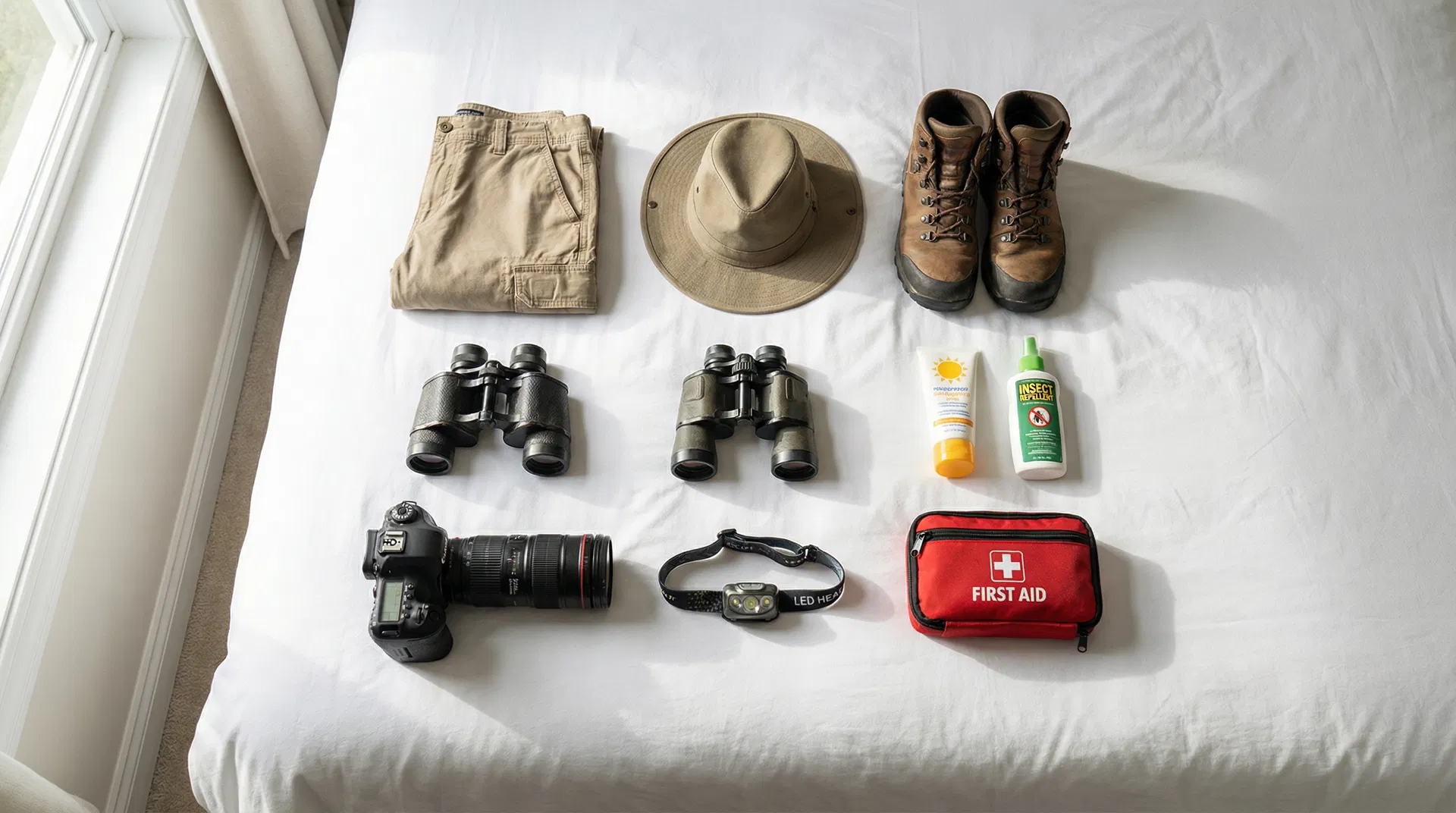
- Three to four pairs of lightweight, quick-drying pants or convertible pants
- Four to five short-sleeved shirts in neutral colors
- Two long-sleeved shirts for sun protection and evening insect protection
- One warm fleece or softshell jacket
- One lightweight rain jacket
- Comfortable walking shoes or boots for bush walks
- Sandals or flip-flops for lodge relaxation
- A wide-brimmed hat for sun protection
- A warm beanie for early morning drives
- Swimwear if your lodge has a pool
Photography Equipment
A camera is essential for capturing safari memories. The equipment you bring depends on your photography experience and interest level.
For serious photographers, a DSLR or mirrorless camera with a telephoto lens of at least 200mm is recommended. A 100-400mm zoom lens is versatile for most safari situations. Bring extra batteries and memory cards, as charging opportunities may be limited in remote camps.
For casual photographers, a quality point-and-shoot camera with a good zoom or a modern smartphone with a telephoto lens attachment can produce excellent results. Many memorable safari photos are wide-angle shots capturing landscapes and atmosphere.
A beanbag or window mount provides stable support for photography from safari vehicles. Tripods are useful for walking safaris and lodge photography but can be cumbersome in vehicles.
Binoculars
Quality binoculars are arguably the most important piece of equipment after your camera. They allow you to observe wildlife behavior in detail and spot distant animals that would otherwise be invisible. Compact 8x42 or 10x42 binoculars offer the best balance of magnification and portability for safari use.
Health and Personal Items
- Prescription medications with copies of prescriptions
- Malaria prophylaxis as prescribed by your doctor
- Insect repellent containing DEET or picaridin
- High-SPF sunscreen and lip balm with sun protection
- Basic first aid supplies including bandages and antiseptic
- Hand sanitizer and wet wipes
- Personal toiletries in travel-sized containers
Luggage Considerations
If your safari includes flights on light aircraft, you will likely face strict luggage weight limits, typically 15 to 20 kilograms including carry-on items. Soft-sided duffel bags are strongly preferred over hard-shell suitcases, as they can be compressed to fit in small aircraft cargo holds.
Pack a small daypack for carrying essentials during game drives, including your camera, binoculars, sunscreen, water bottle, and a light layer.
Electronics and Charging
- Universal power adapter for your destination country
- Portable power bank for charging devices in remote locations
- Headlamp or small flashlight for navigating camps at night
- Waterproof phone case for boat-based activities
What Not to Bring
Avoid packing unnecessary items that add weight without value. Leave expensive jewelry at home. Avoid camouflage clothing, which is illegal to wear in several African countries. Skip heavy books in favor of an e-reader. Resist the temptation to overpack shoes, as two or three pairs are sufficient for most safaris.
The African Safari Planning Blueprint — Your Complete Guide
80+ Pages of Expert Knowledge in One Place
The comprehensive guide that replaces weeks of scattered research. 80+ pages of expert insights, decision frameworks, and insider knowledge.
Helpful Guides for Your Safari Planning
Optional planning guides built from real safari industry experience. Use them alongside our free knowledge center to plan your trip.
Need Expert Safari Guidance?
Our safari advisors can help you plan the perfect itinerary based on your interests, budget, and travel dates. Get personalized recommendations from experts who have lived and worked across Africa.
Explore Related Topics
Recommended Reading
 Packing & Preparation
Ultimate Safari Packing List for Walking Safaris
This is a dummy meta description for Ultimate Safari Packing List for Walking Safaris.
7 min readPacking & PreparationUltimate Safari Packing List for Photography Safaris
This is a dummy meta description for Ultimate Safari Packing List for Photography Safaris.
6 min readPacking & PreparationSafari Camera Gear Packing Guide
Learn all about Safari Camera Gear Packing Guide in this comprehensive guide.
7 min read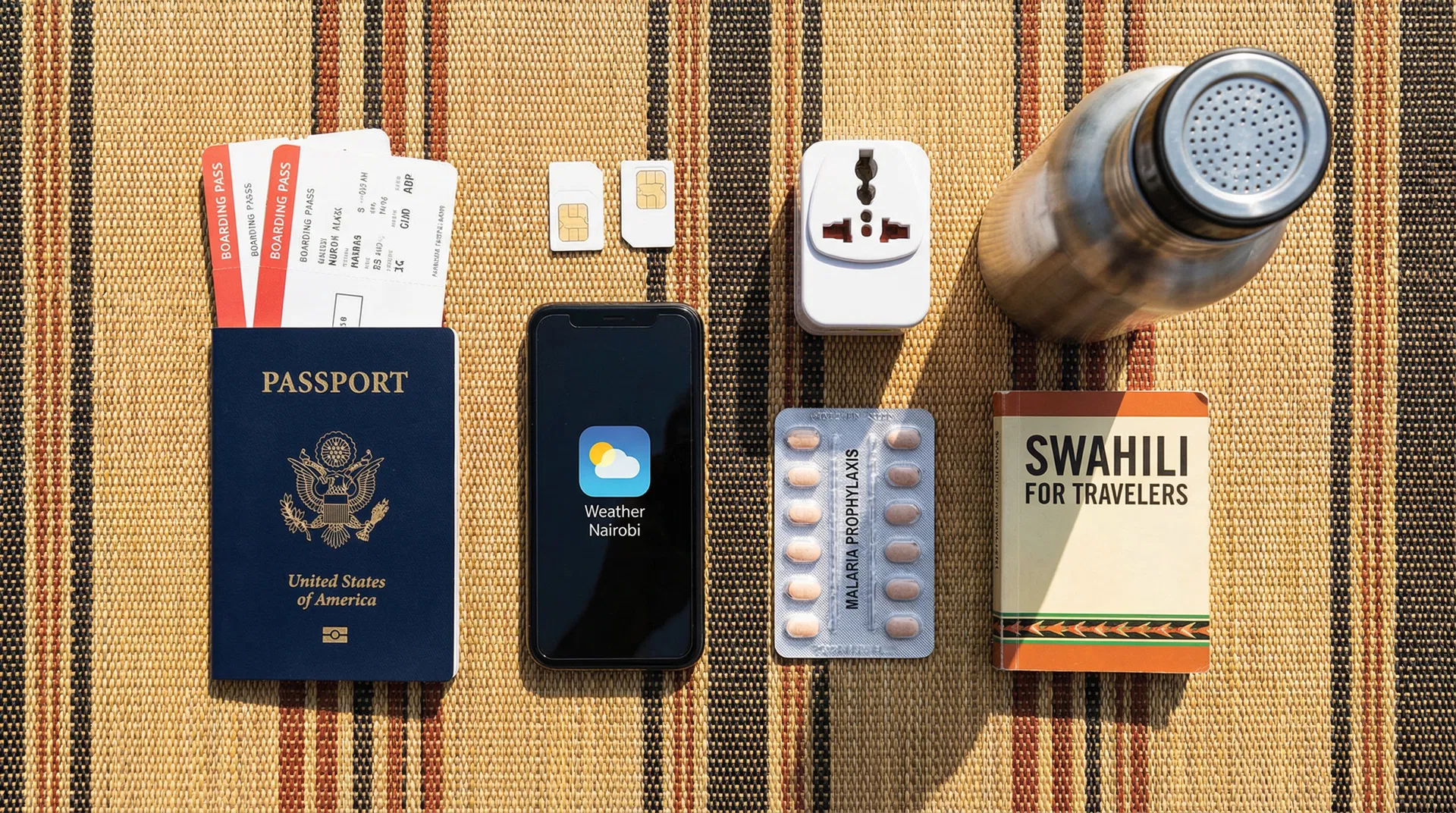 Safari Travel Tips
Safari Packing Checklist
Master your safari packing with our expert checklist. Learn what to wear, essential gear to bring, and what to leave behind for your African adventure.
8 min read Safari Comparison Articles
Adventure Safari vs Relaxation Safari
An in-depth comparison of Adventure Safari vs Relaxation Safari to help you choose the perfect safari experience. Explore the pros, cons, and key differences to
2 min read Advanced Safari Planning
Safari Adventure Travel
Discover the ultimate guide to safari adventure travel. Learn about active exploration, top destinations like Uganda and Tanzania, and essential planning tips.
7 min read