Destination Overview
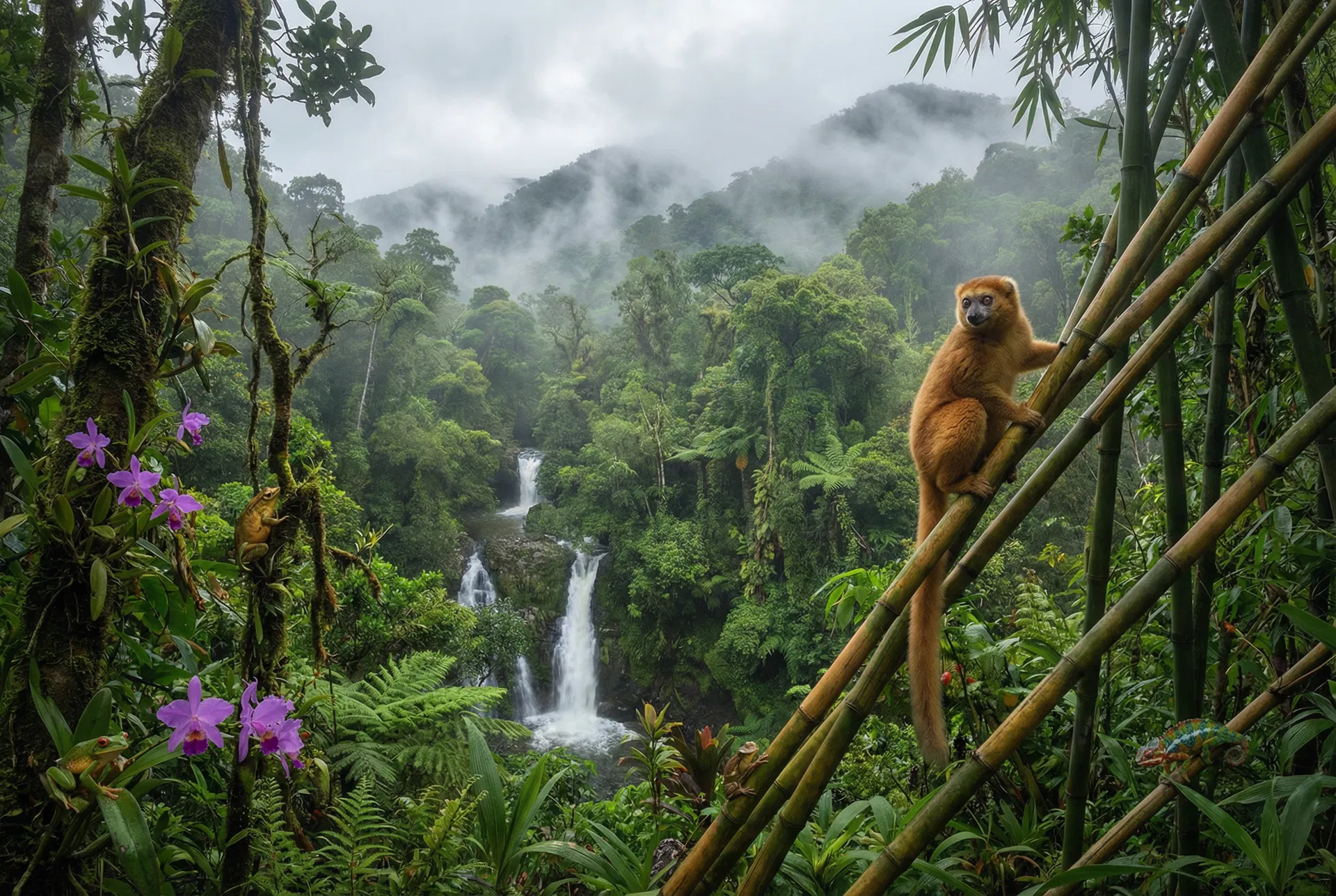
Ranomafana National Park, located in the southeastern region of Madagascar, is a treasure of biodiversity and a sanctuary for some of the world's rarest flora and fauna. Its name, which translates to "hot water" in the Malagasy language, hints at the geothermal springs found in the area, but the park itself is a cool, misty rainforest teeming with life. Established in 1991, the park was created to protect its unique inhabitants, particularly the critically endangered golden bamboo lemur, whose discovery in the region was a pivotal moment in conservation history. Spanning over 41,600 hectares of mountainous terrain, Ranomafana is a mosaic of lush rainforest, cloud-draped peaks, and cascading waterfalls, offering visitors a glimpse into a world of unparalleled natural beauty. The park's rich ecosystem, a designated UNESCO World Heritage Site, draws travelers and researchers from across the globe, all eager to experience its pristine wilderness and encounter its remarkable wildlife.
Wildlife Highlights
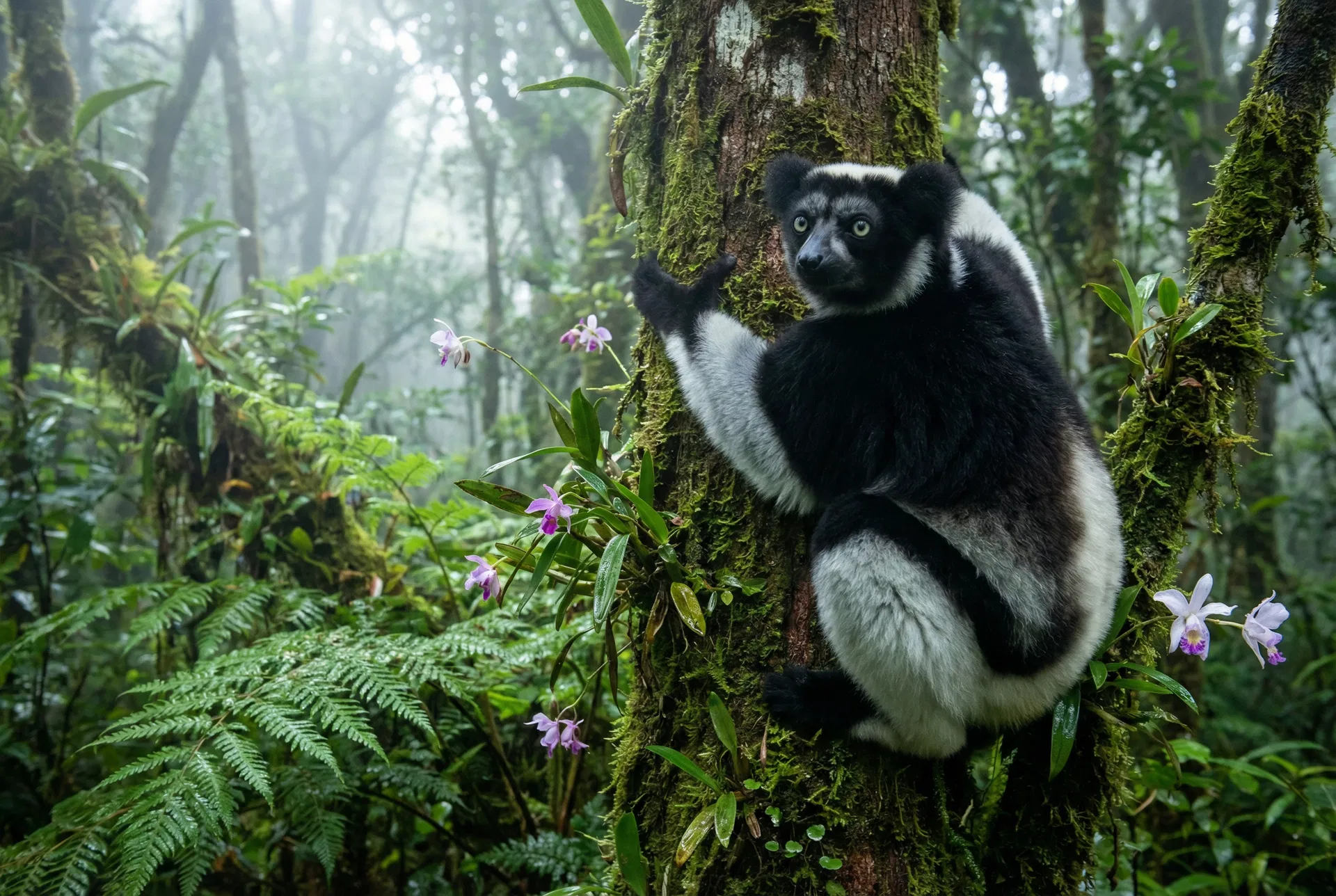
Ranomafana National Park is world-renowned for its incredible lemur diversity, boasting 12 species that have adapted to various niches within the forest. The park is one of the best places in Madagascar to observe these charismatic primates. Among the most sought-after sightings is the golden bamboo lemur (Hapalemur aureus), a species whose diet consists almost exclusively of giant bamboo. Another key species is the greater bamboo lemur (Prolemur simus), which was once thought to be extinct but was rediscovered in this area.
During the day, visitors can also spot the Milne-Edwards' sifaka (Propithecus edwardsi), a large and impressive lemur known for its acrobatic leaps through the canopy. Other diurnal lemurs include the red-bellied lemur (Eulemur rubriventer), the red-fronted brown lemur (Eulemur rufifrons), and the Ranomafana grey bamboo lemur (Hapalemur griseus ranomafanensis). The elusive southern black and white ruffed lemur (Varecia variegata editorum) can also be found here, though sightings are less common.
Night walks in Ranomafana offer a chance to encounter a different cast of characters. The nocturnal lemurs include the iconic aye-aye (Daubentonia madagascariensis), with its unique feeding habits, as well as the tiny brown mouse lemur (Microcebus rufus), one of the world's smallest primates. Other nocturnal species include Crossley's dwarf lemur (Cheirogaleus crossleyi), Peyrieras's woolly lemur (Avahi peyrierasi), Sibree's dwarf lemur (Cheirogaleus sibreei), and the small-toothed sportive lemur (Lepilemur microdon).
Beyond lemurs, the park is a haven for a wide array of other wildlife. It is home to 118 species of birds, many of which are endemic to Madagascar. Birdwatchers can look for species such as the ground rollers, blue vangas, short-legged ground rollers, and brown mesites. The park also supports a rich diversity of reptiles and amphibians, with over 100 species of frogs and numerous chameleons, lizards, and snakes. The vibrant and varied insect life, including many species of butterflies, adds another layer to the intricate web of life in this exceptional rainforest.
Best Time to Visit
The best time to visit Ranomafana National Park is during the dry season, which runs from April to November. During these months, the weather is milder and there is less rainfall, making the hiking trails more accessible and enjoyable. The reduced rainfall also means fewer leeches, which can be abundant during the wet season. The months of September and October are particularly ideal, as this is when many lemurs have their babies, offering a unique opportunity to see mothers with their infants. The wet season, from December to March, brings heavy rains that can make trails slippery and challenging. While the rainforest is at its most lush during this time, the weather can be unpredictable and may disrupt travel plans.
Safari Experience
A safari in Ranomafana is an immersive rainforest experience that primarily revolves around guided walks and hikes. Unlike the vehicle-based safaris of the African savanna, exploring Ranomafana requires being on foot, allowing for a more intimate connection with the environment. Visitors are required to hire a local guide, who possesses an expert knowledge of the forest and its inhabitants. These guides are skilled at spotting well-camouflaged wildlife and can interpret the sights and sounds of the rainforest. The terrain can be steep and muddy, so a good level of fitness is recommended. Hikes can range from short, relatively easy walks to more strenuous, multi-day treks into the park's remote areas. Night walks along the park's perimeter are a popular activity, offering a chance to see the forest's nocturnal creatures come to life.
Landscape and Ecosystem
Ranomafana National Park encompasses a stunningly beautiful and rugged landscape, characterized by steep, forested hills, deep valleys, and numerous rivers and streams. The park's altitude ranges from 800 to 1,200 meters, creating a variety of microclimates and habitats. The dominant vegetation is tropical rainforest, with a dense canopy of trees, ferns, and epiphytes. In the higher elevations, the rainforest transitions into a misty cloud forest, where the trees are draped in mosses and lichens. This rich and varied ecosystem is of immense ecological importance, supporting an extraordinary level of biodiversity, much of which is found nowhere else on Earth. The park is a critical watershed for the surrounding region, and its forests play a vital role in regulating the local climate.
Safari Activities
The primary activity in Ranomafana National Park is wildlife viewing, with a focus on lemurs. This is done through a network of hiking trails that wind through the forest. The park offers a variety of trails to suit different fitness levels and interests, from short, family-friendly walks to challenging multi-day treks. Birdwatching is another popular activity, with the park being home to a high number of endemic bird species. Guided night walks are a must-do for anyone visiting Ranomafana, as they provide an opportunity to see the park's nocturnal wildlife, including mouse lemurs, dwarf lemurs, and chameleons. For those seeking a different perspective, kayaking or canoeing on the Namorona River can be arranged. A visit to the nearby hot springs, from which the park gets its name, offers a chance to relax and unwind after a day of hiking.
Where It Is Located
Ranomafana National Park is situated in the southeastern part of Madagascar, in the regions of Haute Matsiatra and Vatovavy. The nearest major city is Fianarantsoa, which is approximately 65 kilometers to the northeast. The park entrance is located near the village of Ambodiamontana, about 6.5 kilometers from the town of Ranomafana. The park is accessible via National Road 25 and National Road 45. The journey from Antananarivo, the capital of Madagascar, to Ranomafana takes approximately 8-10 hours by road. The nearest airport is in Fianarantsoa, but it has limited flight schedules. Most visitors arrive by private vehicle or taxi-brousse (shared taxi) from Antananarivo or other nearby towns.
Who This Destination Is Best For
Ranomafana National Park is an ideal destination for adventurous travelers with a keen interest in wildlife, particularly primates, and a love for pristine natural environments. It is a paradise for hikers, birdwatchers, and photographers who are willing to put in the effort to be rewarded with incredible sightings. The park's focus on walking safaris and its sometimes challenging terrain make it best suited for those with a reasonable level of physical fitness. Researchers and students of biology and conservation will find Ranomafana to be a living laboratory of evolution and biodiversity. While families with older children who enjoy hiking can have a wonderful time, the park may not be suitable for very young children or those with mobility issues. Luxury travelers will find comfortable accommodations in the nearby lodges, but the main attraction is the authentic and wild rainforest experience.