Expert guide on best time to see the great migration in serengeti with month-by-month conditions, pricing, and planning recommendations for safari travelers.
The Calving Season: January to March
The calving season is a fantastic time to see the Great Migration in the Serengeti. During this time, hundreds of thousands of wildebeest give birth to their calves in the southern Serengeti. This is a time of great drama, as predators such as lions, cheetahs, and hyenas are on the lookout for an easy meal. The calving season is a great time for photography, with lots of action and adorable baby animals. Our destinations page has more on the southern Serengeti.
The River Crossings: July to October
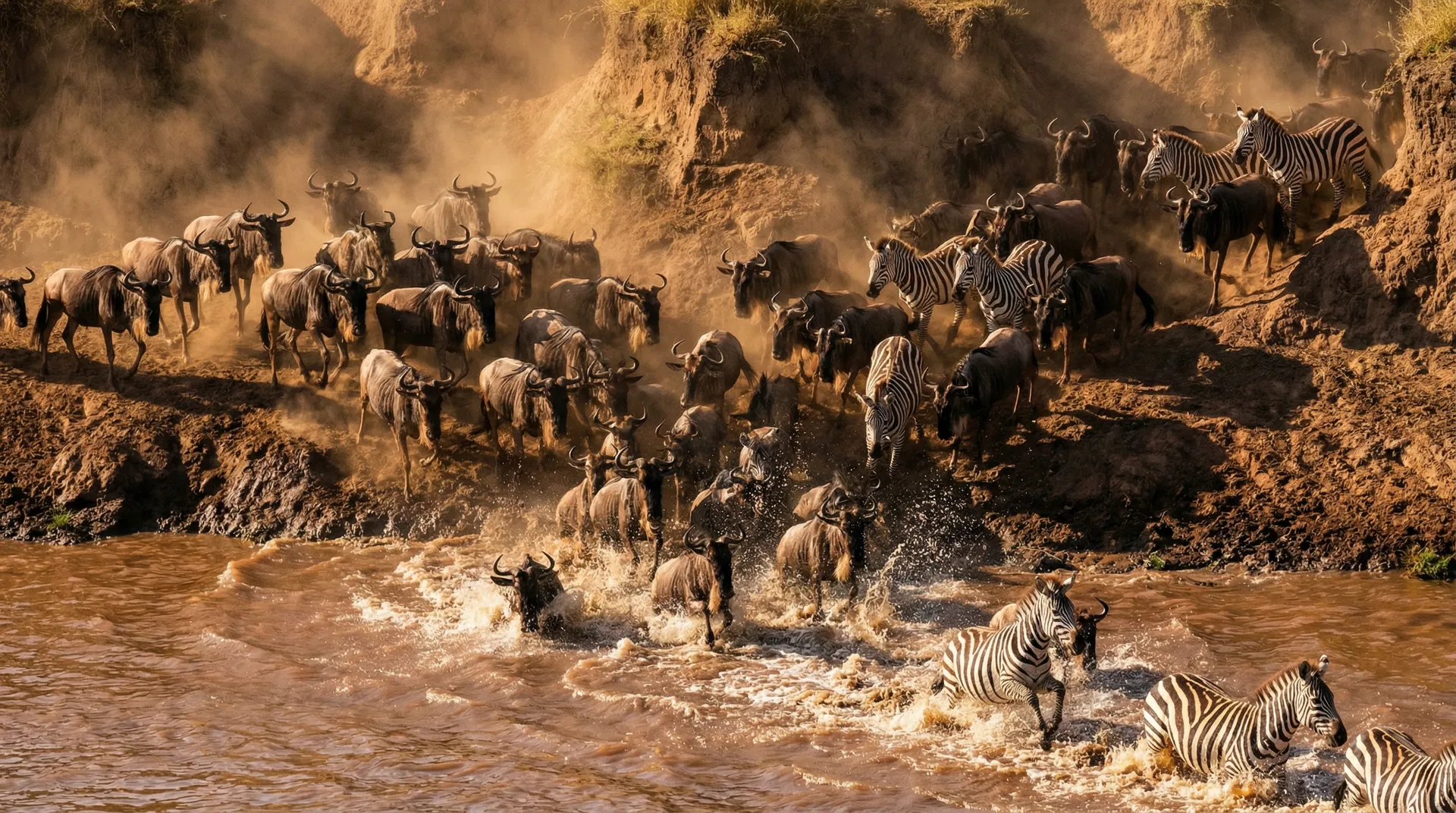
The river crossings are the most famous and dramatic part of the Great Migration. During this time, the herds must cross the Grumeti and Mara rivers, which are infested with crocodiles. The river crossings are a life-or-death struggle, and not all animals make it across. This is a powerful and unforgettable wildlife spectacle. The river crossings are the most popular part of the migration, so be sure to book your trip well in advance. Our knowledge center has more on the Great Migration.
Not Sure Where to Start?
Start HereA Year-Round Spectacle
The Great Migration is a year-round event, and there is always something to see. The herds are constantly on the move, following the rains in search of fresh grazing. The best time to see the migration depends on what you want to experience. Our safari advisors can help you plan a trip that coincides with the part of the migration that you are most interested in.
_This article has been expanded by an expert safari writer to provide more in-depth information and planning advice._
The Calving Season: A Time of New Beginnings (January – March)
The Great Migration reaches a dramatic and poignant peak in the southern Serengeti during the early months of the year. From late January to March, the vast, short-grass plains of the Ndutu region, technically within the Ngorongoro Conservation Area but contiguous with the Serengeti, become the birthing ground for over 500,000 wildebeest calves. This incredible natural event, happening over a concentrated three-week period, infuses the ecosystem with new life and triggers some of the most intense predator action you can witness in Africa.
This is not a time for dramatic river crossings, but for the raw, unfiltered drama of life and death. The sheer number of vulnerable calves creates a feast for predators. Lions, cheetahs, and hyenas are all drawn to the area, and it is not uncommon to witness a hunt from start to finish. The open plains provide excellent visibility, making it a prime time for photographers and wildlife enthusiasts who want to experience the circle of life firsthand.
> Expert Insight: The calving season is a photographer's dream. The combination of dramatic predator-prey interactions, adorable young animals, and the beautiful, green landscape following the rains provides endless opportunities for stunning shots. To make the most of it, consider a private vehicle to have the flexibility to wait for the perfect moment.
While the timing can vary slightly based on the rains, booking a safari between February and early March gives you the highest probability of witnessing the peak of the calving season. Our safari advisors can help you pinpoint the best time and location based on the most current migration patterns.
The Northward Journey & The Grumeti River Crossing (April – June)
As the southern plains begin to dry up around April and May, the great herds begin their long trek north and west, a journey of hundreds of kilometers. This is a period of transition and movement. The long columns of wildebeest and zebra, often stretching for miles, are a sight to behold. The herds move through the Serengeti’s Western Corridor, a less-crowded region of the park known for its riverine forests and large resident wildlife populations.
The first major obstacle the herds encounter is the Grumeti River. While not as famous as the Mara River, the Grumeti crossing can be equally dramatic. The river is home to some of Africa’s largest crocodiles, and they lie in wait for the herds to cross. The wildebeest, driven by instinct, plunge into the water, and the ensuing chaos is a powerful display of survival of the fittest.
> Traveler's Tip: The Western Corridor is a fantastic area to visit in May and June. The landscape is beautiful, and you can often enjoy more exclusive game viewing experiences than in the more popular parts of the park. It's a great time to combine migration viewing with general wildlife watching.
This period also coincides with the start of the dry season, which means the vegetation is less dense, making wildlife easier to spot. The weather is generally pleasant, with clear skies and cooler temperatures. For travelers looking to experience the migration on the move and witness a dramatic river crossing without the crowds of the Mara, this is an excellent time to visit. Our destinations guide has more information on the Western Corridor.
The Mara River Crossing: The Ultimate Spectacle (July – October)
The period from July to October is arguably the most famous and sought-after phase of the Great Migration. This is when the herds reach the northern Serengeti and face their most formidable challenge: the Mara River. The river, which flows from the Kenyan highlands, is deep, fast-flowing, and infested with crocodiles. The scenes that unfold here are the stuff of wildlife documentaries – chaotic, dramatic, and utterly unforgettable.
The wildebeest congregate on the banks of the river, often for days, building up in numbers and courage before one brave individual takes the plunge, triggering a mass crossing. The panic and confusion are palpable as the animals surge through the water, battling the strong currents and dodging the snapping jaws of the crocodiles. It is a spectacle of life and death on a grand scale.
> Expert Insight: Witnessing a Mara River crossing requires patience. It's not a scheduled event, and you may need to wait for hours, or even days, for the herds to decide to cross. A good guide is essential. They will know the best crossing points and be able to read the behavior of the animals to predict when a crossing is likely to happen. Consider a longer stay in the northern Serengeti to maximize your chances.
This is also the peak tourist season in the Serengeti, so it is essential to plan your trip well in advance. Accommodation in the northern Serengeti gets booked up months, and sometimes even years, ahead. Our plan your safari tool can help you get started with the planning process.
The Return South: A Time of Replenishment (November – December)
Following the short rains in November, the migration completes its circuit and the herds begin their journey back south from the Mara region to the now-replenished plains of the southern Serengeti. This is a time of replenishment and renewal. The landscape is transformed by the rains, and the air is clear and fresh. The herds are on the move again, and while there are no major river crossings to navigate, the sheer spectacle of hundreds of thousands of animals moving across the vast plains is still a sight to behold.
This is an excellent time for travelers who want to experience the migration with fewer crowds. The lodges are not as busy as they are during the peak season, and you can often find better deals on accommodation. The birdwatching is also exceptional at this time of year, with many migratory species present.
> Traveler's Tip: November and December can be a bit of a gamble with the weather, as the short rains can be unpredictable. However, the rewards can be great, with lush, green landscapes, dramatic skies, and a sense of exclusivity. It's a great time for seasoned safari-goers or those looking for a different perspective on the migration.
Planning Your Migration Safari: Costs and Considerations
A Great Migration safari is a dream trip for many, but it's also a significant investment. The cost of a migration safari can vary widely depending on the time of year, the level of accommodation, and the length of your trip. As a rough guide, you can expect to pay anywhere from $5,000 to $15,000 per person for a one-week safari.
Our cost calculator can give you a more personalized estimate based on your travel style and preferences. It's also important to remember that the prices for accommodation in the Serengeti are highest during the peak season (July-October). If you are on a tighter budget, consider traveling during the shoulder seasons (April-June or November-December).
No matter when you choose to go, the Great Migration is an experience that will stay with you for a lifetime. The sheer scale of the event, the raw drama of the river crossings, and the beauty of the Serengeti landscape all combine to create a truly unforgettable adventure. Our safari advisors are here to help you plan the perfect trip, so don't hesitate to get in touch.
Not Sure Where to Start?
Take our guided safari quiz and get a personalized starting point based on your interests, budget, and travel style.
Ready to plan? Use our step-by-step system to turn your research into a real safari trip.
Start the Safari Planning SystemRelated Planning Guides
Recommended Reading
 Season & Timing Guides
Best Time to See the Great Migration in Masai Mara
Expert guide on best time to see the great migration in masai mara with month-by-month conditions, pricing, and planning recommendations for safari travelers.
Season & Timing GuidesBest Time to See Calving Season in Serengeti
Expert guide on best time to see calving season in serengeti with month-by-month conditions, pricing, and planning recommendations for safari travelers.
 Additional Safari Topics
Best Time to See the Migration
Discover the best time to witness the Great Migration. Our month-by-month guide helps you plan your safari to see this incredible wildlife spectacle.
Season & Timing GuidesBest Time to See Baby Animals on Safari
Expert guide on best time to see baby animals on safari with month-by-month conditions, pricing, and planning recommendations for safari travelers.
Additional Safari TopicsGreat Migration Guide
Planning a Great Migration safari? Our expert guide covers the annual cycle, top destinations, and essential tips for witnessing this incredible wildlife spectacle.
Additional Safari TopicsSerengeti Migration Map Guide
Planning a Serengeti safari? Our guide to the Great Migration map helps you understand the herds\